
Reviewed · BERLIN SIGHTSEEING TOURS
Historical city tour in the African Quarter in Berlin
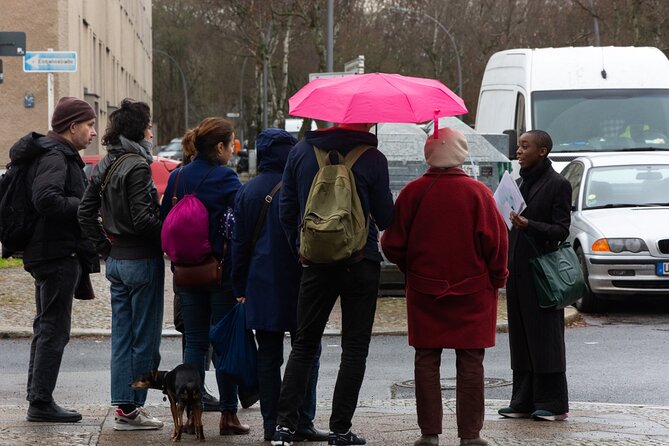
The African Quarter is not simply a collection of streets with unusual names. It is a public record of German colonial ambition, written into Berlin’s map. This two-hour walk uses Swakopmunder Straße, Anna-Mungunda-Allee, Manga-Bell-Platz, and Kongostraße to ask who was honored, who was ignored, and why those names still matter.
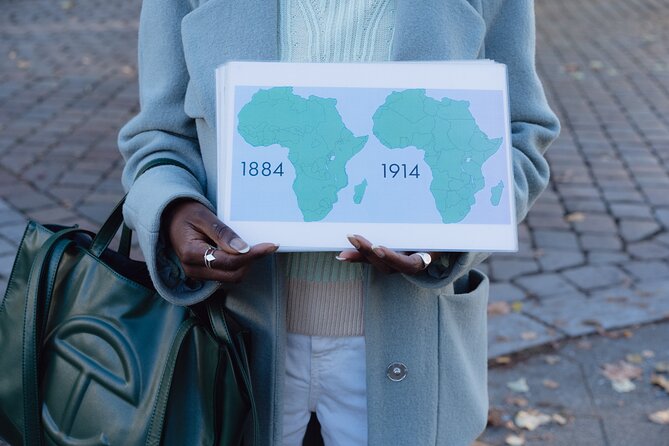
I like the focused route and the use of maps to show Africa before and after the 1884 Congo Conference. I also like the change of perspective: the tour does not treat colonial history as a distant side note. The main consideration is that the subject is serious, and the short stops mean you will need to listen closely rather than expect a long visit at each place.
Key points to know before you book
- Swakopmunder Straße connects Berlin with Namibia, opening the walk with questions about Germany’s role there.
- Anna-Mungunda-Allee brings the street-name debate into the present, including the question of renaming Petersallee.
- Manga-Bell-Platz recalls Gustav Nachtigal, a figure linked to Germany’s colonial period.
- Kongostraße explains the 1884 Congo Conference, including why no African representatives were present.
- The two-hour format keeps the subject manageable, but each stop lasts only about five minutes.
- A group of up to 20 keeps the walk fairly personal, though the published score of 3.7 from six ratings suggests you should book for the subject, not on reputation alone.
Why Berlin’s African Quarter deserves your attention
Berlin often presents its past through grand museums, royal buildings, and memorials. The African Quarter offers something less polished and more revealing: ordinary streets carrying names tied to empire, colonial officials, and African places.
That makes the area useful for understanding how history enters daily life. A street sign is easy to pass without thought. Here, the guide asks you to pause and consider why that name was chosen, who made that choice, and how the meaning has changed.
The area is described as a monument made up of 22 streets. That does not mean every street receives a full explanation during this tour. Instead, the route uses a few important locations to explain a larger story about Germany and Africa in the colonial period of the 20th century.
I appreciate that approach. You do not need to know German colonial history before arriving. The questions begin with places you can see, then move toward the political decisions behind them. For anyone who has spent time in Berlin’s major museums but wants a street-level view of the past, this adds another layer to the city.
The strongest praise for the experience goes to the guide’s delivery. The guide is described as engaging and well informed, which matters here. A dry lecture about old street names would be easy to forget. A good guide can make each name feel like a question that remains open.
More neighbourhood tours in Berlin:
- Berlin: Hidden Backyards Guided Walking Tour
★ 4.8 · 5,360 reviews - Berlin: Spree Boat Tour to Müggelsee
★ 4.6 · 1,973 reviews - Berlin: Alternative Bike Tour of Kreuzberg & Friedrichshain
★ 4.7 · 548 reviews
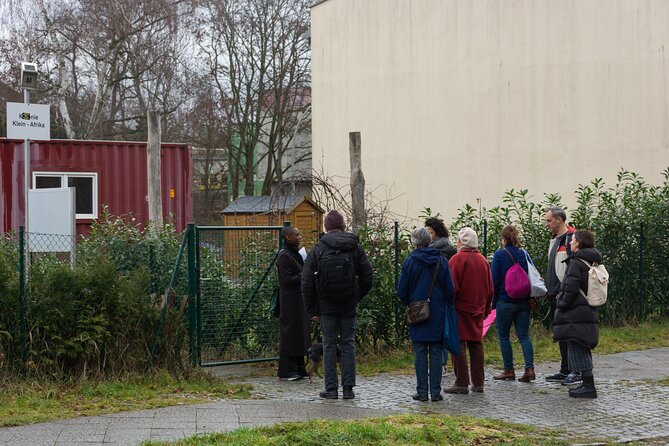
Starting at Swakopmunder Straße
The walk begins at Swakopmunder Str. 44, in the 13351 Berlin postal area. The first stop asks what Swakopmund has to do with Berlin and what role Germany played in Namibia.
Those are direct questions, and they give the tour a clear start. Rather than beginning with a long list of dates, the guide begins with a place name. You see Swakopmunder Straße, then connect it with the wider relationship between Germany and Namibia.
The stop is scheduled for about five minutes. That is enough for an introduction, but not enough for a full lecture on Namibia or German colonial policy. I would treat this as the first piece of a larger explanation, not a complete lesson by itself.
This part should appeal to you if you like history that begins with physical evidence. The street is not just a backdrop. Its name becomes a prompt to ask how European power was remembered in Berlin and how African places were represented in the German capital.
You may also want to bring your own questions. The experience is designed around discussion and a change of viewpoint, so listening for the connection between the street and the colonial period is more useful than trying to photograph the sign and move on.
Anna-Mungunda-Allee and the argument over Petersallee
The second stop is Anna-Mungunda-Allee. Here the guide asks who Petersallee was named after and whether the street should be renamed.
This is one of the most useful parts of the walk because it moves beyond past events. You are not only learning who received public honor. You are considering whether that honor still belongs in a modern city.
The supplied route information does not give a final answer to the renaming question, and that is important. You should expect the guide to explain the background and the debate rather than hand you a simple slogan. The value lies in seeing how a city argues with its own public memory.
The stop lasts about five minutes, so the discussion will be compact. Still, this may be the point that stays with you longest. Street names are practical, but they also tell you whose version of history was once accepted as normal.
I like the inclusion of Anna-Mungunda-Allee because it helps prevent the tour from becoming only a backward look at the colonial era. It shows that Berlin is still deciding how to label and remember its past.
Manga-Bell-Platz and Gustav Nachtigal
At Manga-Bell-Platz, the guide introduces Gustav Nachtigal and asks why the central square of the African Quarter was named after him.
A square carries more public weight than an ordinary side street. The choice of a central place suggests that the person honored there was considered important to the story the quarter was meant to tell. The tour uses that detail to examine how colonial figures were placed into Berlin’s civic memory.
Again, the stop is short, around five minutes. You should not expect a full biography of Nachtigal or an extended visit to a museum display. What you get is a compact explanation linked to the place beneath your feet.
This is also where the tour’s method becomes clear. The guide is not simply naming historic figures. The guide is asking why a name appears here, what that name once signaled, and how you should read it now.
The public square gives the subject a useful scale. Colonial history can feel abstract when it is reduced to government documents or old maps. A named square makes the issue more immediate. You can see how historical judgments became part of the city’s everyday design.
More sightseeing tours in Berlin:
- Berlin: 1-Hour City Tour by Boat with Guaranteed Seating
★ 4.3 · 16,993 reviews - Explore Berlin: See All The Iconic Sights & Some Hidden Gems
★ 5.0 · 4,429 reviews - Berlin: City Sightseeing Hop-On Hop-Off Bus Tour
★ 4.1 · 4,233 reviews - Berlin: Hop-On Hop-Off Sightseeing Bus with Boat Options
★ 4.3 · 4,012 reviews
Kongostraße and the 1884 Congo Conference
The final listed stop is Kongostraße, where the tour turns to Berlin in 1884 and the Congo Conference.
This is likely the most important historical stop because it connects the local street network with an international meeting. The guide explains what the conference was and why no one from Africa was present. That second question is the key one. It shifts attention from European diplomacy to the people excluded from the decision-making process.
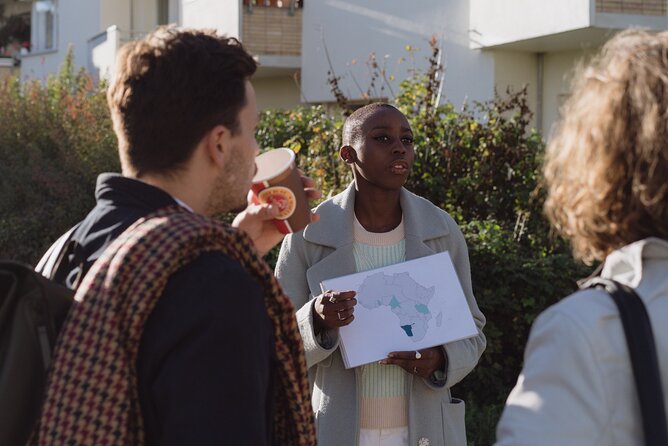
A map showing Africa before and after the Berlin conference gives the discussion a visual foundation. Maps can make political change easier to grasp, especially when the subject involves borders, outside control, and a continent represented by European powers.
The stop lasts about five minutes, so you will not receive a full course in late 19th-century diplomacy. But the format has a practical advantage. The guide can show you the street name, introduce the conference, and connect that event to the wider pattern of colonial rule without allowing the talk to drift too far from the place itself.
For me, this is the point that gives the walk its strongest sense of purpose. You are not only learning a date. You are seeing how a major European decision became part of a German neighborhood named for African countries and colonial-era figures.
A short walk with a serious subject
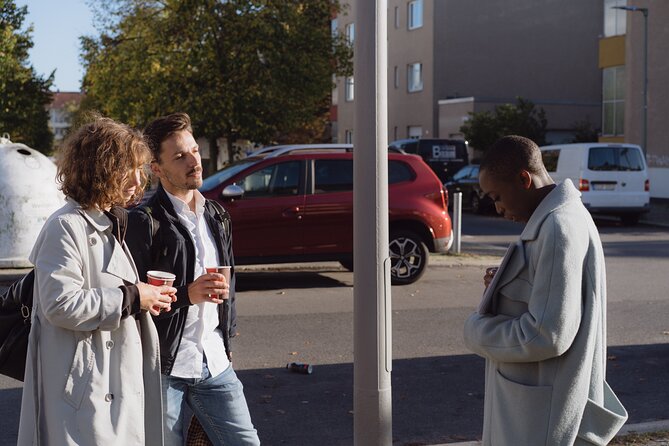
The full experience lasts about two hours. The four listed stops each take about five minutes, so much of the time is likely spent walking between them and building connections among the subjects.
That makes the tour easy to fit into a Berlin day. You do not need to give up half a day, and you can follow it with another activity in the city. The trade-off is depth. If you want long conversations about Namibia, Gustav Nachtigal, or the Congo Conference, two hours will feel brief.
I see the short format as a benefit for first-time learners. The tour gives you a clear introduction without asking you to master a large amount of background. You can leave with several names, questions, and historical connections to explore later.
The subject itself calls for attention. This is not a light sightseeing loop with a few amusing facts. The tour examines colonial power, public commemoration, and the absence of African voices from a major conference. You should book it if you want to think, not simply collect another neighborhood from your Berlin checklist.
The walk also depends on the guide’s ability to keep the story clear. The strongest praise attached to this experience focuses on an engaging guide, and that is the right quality to look for. The names and dates matter, but the success of the walk rests on how well the guide links them to the streets around you.
How much value do you get for $33.57?
At $33.57 per person, this is not the cheapest way to spend two hours in Berlin. You are paying for a guided interpretation of a subject that can be difficult to understand from street signs alone.
The price makes more sense if you value context. You could walk through the African Quarter without paying anything, but you would miss the explanations connecting Swakopmund, Namibia, Petersallee, Manga-Bell-Platz, Gustav Nachtigal, and the Congo Conference.
The value is also higher for visitors who prefer a compact introduction. You are not committing to a full museum visit or a day-long seminar. The group can include up to 20 people, which is small enough to make a guided discussion possible without the cost of a private tour.
I would not book this mainly for scenic sights. The streets and public spaces support the lesson, but the attraction is the interpretation. You are paying for the questions the guide raises and the connections among places that might otherwise seem unrelated.
The public rating is 3.7 from six ratings, a small sample. One five-star assessment calls the experience a must-do and praises the guide’s engaging style. That positive note supports the tour’s main strength, but the limited number of ratings means I would weigh your interest in the subject more heavily than the score.
Meeting point, transport, and group size
The meeting point is Swakopmunder Str. 44, 13351 Berlin. The walk ends at Rehberge, 13349 Berlin, so you should expect to finish in a different place from where you began.
The route is near public transportation, which helps with both arrival and departure. Check your route before setting out, especially because the end point is not the starting point. A mobile ticket makes the booking simple, but you should still allow time to find the exact meeting point.
The maximum group size is 20. That is not an intimate private walk, but it is small enough for the guide to keep a group together on city streets. Since the stops are brief, arriving on time matters. Missing the opening explanation at Swakopmunder Straße could make later references harder to follow.
Most people can take part, and service animals are allowed. The experience requires good weather, so keep that in mind when planning a tightly scheduled Berlin day. If poor weather cancels the walk, you can choose another date or receive a full refund.
Who will get the most from this walk?
I would recommend it most strongly to you if you have an interest in:
- German colonial history and its connection to Namibia
- The way cities honor public figures through street names
- Current debates about renaming streets and squares
- Berlin’s less familiar historical districts
- Guided walks built around discussion rather than grand monuments
- A short activity that fits into a larger day of sightseeing
It is also a good choice if you have already seen Berlin’s main landmarks and want a different kind of city experience. The African Quarter does not rely on famous architecture. Its meaning comes from names, signs, maps, and the questions attached to them.
I would be more cautious about booking if you want a relaxed stroll with mostly visual attractions. The subject is serious, and the experience asks you to concentrate. It may also feel too short if your main goal is an extended study of German colonial policy.
Families and mixed groups can take part, since most participants are allowed, but the real test is interest. A person who enjoys asking why a street has a certain name will get more from this than someone looking only for quick photo stops.
Final verdict: book it for the questions
I recommend this walk if you want to understand how Germany’s colonial past appears in an ordinary Berlin neighborhood. The best parts are specific and memorable: Swakopmunder Straße’s link with Namibia, the debate around Petersallee, Gustav Nachtigal’s place in Manga-Bell-Platz, and the map-based explanation of the 1884 Congo Conference.
The two-hour length keeps the experience practical, while the four main stops give the route a clear shape. The drawback is limited time at each location, and the modest rating sample means you should not treat the tour as a guaranteed highlight for every visitor.
Book it for the guide’s interpretation, the small-group format, and the chance to question the names built into Berlin’s streets. Skip it if you want light sightseeing or a long, academic lecture. For an honest look at a part of the city many people pass without considering, $33.57 is a fair price.
FAQ
How long does the African Quarter tour last?
The walking tour lasts approximately two hours.
Where does the tour begin?
It begins at Swakopmunder Str. 44, 13351 Berlin, Germany.
Where does the tour end?
The tour ends at Rehberge, 13349 Berlin, Germany.
What places are included on the route?
The listed stops are Swakopmunder Straße, Anna-Mungunda-Allee, Manga-Bell-Platz, and Kongostraße.
How large can the group be?
The activity has a maximum group size of 20 participants.
Can I cancel for a full refund?
Yes. You can cancel at least 24 hours before the experience start time for a full refund. Cancellations or changes made less than 24 hours before the start are not refunded or accepted.
More history tours in Berlin
- Berlin: Natural History Museum Entrance Ticket
★ 4.6 · 3,382 reviews - Berlin: World Heritage Cruise to Potsdam
★ 4.5 · 1,435 reviews - Berlin Historical Highlights Walking Tour
★ 4.9 · 657 reviews - Berlin Private Complete History All Day Walking Tour
★ 5.0 · 474 reviews
Newest Berlin reviews
- Where It All Began: Berlin’s Queer & Trans History Tour★ 4.9 · 6 reviews
- Understanding Kreuzberg: The roots of local (sub)culture★ 4.9 · 11 reviews
- Berlin: guided canoe | kayaktour★ 4.1 · 7 reviews
- Private Potsdam City Tour in an authentic vintage van★ 5.0 · 14 reviews
- Warnemünde Shore Excursion: Private Sachsenhausen and Berlin Tour★ 5.0 · 12 reviews
- Ultimate E-Bike Tour of Berlin with Beer Garden Stop★ 5.0 · 4 reviews
- In the Forbidden City – Potsdam Walking Tour★ 5.0 · 17 reviews
- Private Walking Tour of Potsdam and Sanssouci★ 5.0 · 24 reviews
Berlin Sightseeing Tours, compared.
1-Hour City Tour by Boat with Guaranteed Seating
Read our review →
Explore Berlin: See All The Iconic Sights & Some Hidden Gems
Read our review →
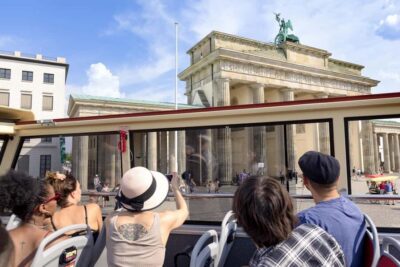
Hop-On Hop-Off Sightseeing Bus with Boat Options
Read our review →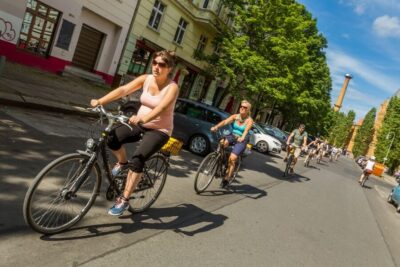
Sights and Highlights Bike Tour with a Local Guide
Read our review →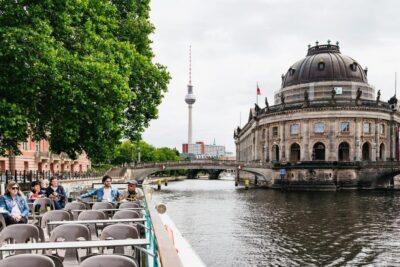
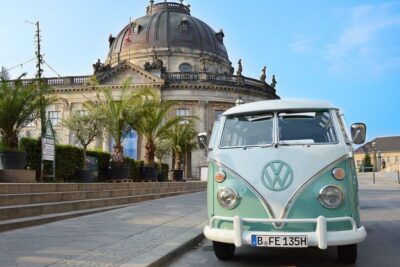
Sightseeing Tour in Classic Volkswagen T1 Samba Bus
Read our review →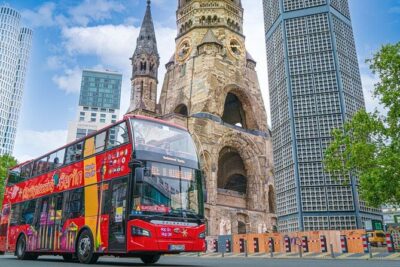
Browse the lists this tour appears in