
Reviewed · BERLIN RICKSHAW TOURS
Daily First Rickshaw promotion in Combi Vehicle public Group 90€
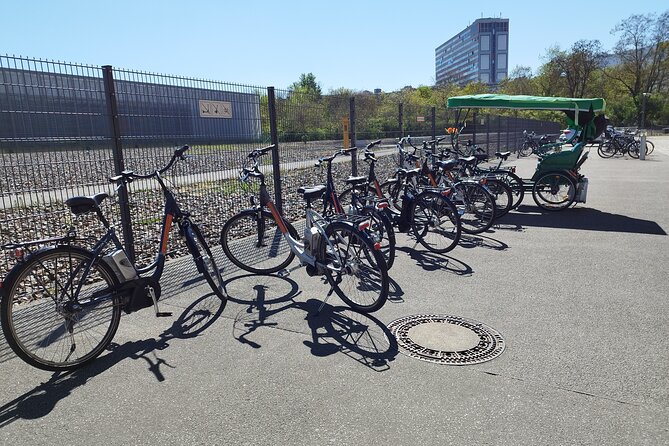
Berlin is a large, spread-out city, and this four-hour rickshaw tour gives you a quick, comfortable way to connect its major sights. You sit close to the street while your guide handles the driving, points out details, and pulls over for photos.
I like the small two-person format, which keeps the ride personal and makes it easier to ask questions or adjust the route. I also like the practical comfort: a roof, blankets in wet or cool weather, bottled water, WiFi, and a guide who can bring you close to monuments without long walks.
The main consideration is the price. At about $216.74 per group, or roughly €90 under the listed daily promotion, this costs more than a standard walking tour or public sightseeing bus. You are paying for comfort, a private ride, and efficient coverage rather than museum entry or a long stop at each site.
Key points to know before booking
- See nine major Berlin sights in about four hours, from Alexanderplatz to Brandenburg Gate.
- Ride with up to two people, making this a private and easy-to-manage experience.
- Expect frequent photo stops, but not extended visits inside museums or memorial buildings.
- Start at Weinbergsweg 6, with the ride returning to the same meeting point.
- Ask for an early departure, since a 9:00 a.m. start can mean quieter conditions around the main sights.
- Plan for outdoor sightseeing, with free cancellation available up to 24 hours before departure.
Why a Berlin rickshaw makes sense
A rickshaw is a useful middle ground between walking and a large sightseeing bus. You cover much more ground than you could on foot, yet you remain close to Berlin’s streets, buildings, and memorials.
The vehicle is especially practical for anyone who tires easily. You only need a few steps to get in, and the guide can stop close to monuments. The tour is also suitable if you want to avoid a large group. The maximum is two people, so you will not be waiting for a busload of strangers to gather after every stop.
That small size also gives the guide room to respond to your interests. If you care more about Cold War Berlin than royal architecture, say so. If you want extra photos, a restaurant suggestion, or a quick explanation of a building you pass, this format is better suited than a fixed coach route.
The tradeoff is space. A rickshaw is not a roomy vehicle, and a four-hour ride may feel snug for some people. The experience also depends on outdoor conditions. A roof and blanket help in the rain, but they do not turn Berlin weather into sunshine.
More rickshaw tours in Berlin:
- Berlin: Private Guided E-Rickshaw Tour
★ 4.9 · 157 reviews - Individual City Tour – Rickshaw Sightseeing in Berlin
★ 5.0 · 120 reviews - Berlin Express: Private 1-Hour E-Rickshaw Ride
★ 5.0 · 116 reviews
Alexanderplatz and Museum Island: Berlin’s city center in one sweep
The tour begins at Weinbergsweg 6, not at the TV Tower itself. From there, the route heads toward Alexanderplatz and the Berliner Fernsehturm, Berlin’s 365-meter TV Tower and tallest structure.
The tower is an excellent orientation point. It rises above the center and helps you understand how Berlin’s old quarters, broad avenues, and newer construction fit together. You will have about five minutes here, with admission to the tower not included. This is a photo and explanation stop, not a tower visit.
The route continues past the Red Town Hall, Marien Church, and Neptune Fountain before reaching Museum Island. These brief drive-by views matter because Berlin’s center can feel scattered when you explore it on foot. The rickshaw links the sights in a clear sequence.
At Museum Island, expect about 15 minutes. The UNESCO-listed complex includes the Berlin Cathedral, the City Palace, the Altes Museum, the Bode Museum, and the Neues Museum. The stop is free, but the tour does not include entry to the museums.
That distinction is important. You can admire the architecture and hear about the area, but you will not have time to explore the collections during this ride. If the Pergamon Museum or Egyptian exhibits are high on your list, save a separate half-day for them.
Bebelplatz and Gendarmenmarkt: beauty with difficult memories
Bebelplatz looks elegant, but the square carries one of Berlin’s most painful reminders of Nazi rule. On May 10, 1933, books judged un-German were burned here in a public display of intimidation.
The surrounding Forum Fridericianum includes the State Opera, Humboldt University, the State Library, and St. Hedwig’s Cathedral. You have about ten minutes to look around and take photos. That is enough for a guide to explain the setting and point out key buildings, though not enough for a long, quiet visit.
I value this stop because it keeps Berlin’s grand architecture tied to the events that took place there. The square is not just a pretty space for photographs. It asks you to consider how culture and public life can be attacked by an authoritarian government.
Gendarmenmarkt follows, with the former Royal Concert Hall between the German and French Cathedrals. Statues and carefully framed buildings give the square a formal, almost theatrical appearance.
Again, the scheduled time is about ten minutes. You can take in the layout, hear the main story, and photograph the façades. Check current conditions before you go, since public squares and buildings can sometimes have access limits or construction work.
Checkpoint Charlie and the Topography of Terror
Checkpoint Charlie is one of Berlin’s best-known Cold War locations. It recalls the former crossing point between East and West Berlin and the 28 years when the Berlin Wall divided the city.
The stop lasts about five minutes, so keep your expectations realistic. You will see the area and learn why it mattered, but you will not get a full museum visit. The surrounding former border strip offers a direct reminder that this was once a controlled line separating families, friends, and political systems.
Some of the current presentation around Checkpoint Charlie is aimed at visitors, and the area can feel more commercial than solemn. That is one reason the guide’s explanation matters. A good account helps you look past the photo opportunity and understand the danger that once defined this crossing.
The route then reaches the Topography of Terror, with about ten minutes at the stop. The documentation center examines Nazi crimes and is located beside the former Gestapo and SS headquarters site. The experience is serious and educational, with outdoor remains and historical displays.
The nearby Martin-Gropius-Bau is another notable building. It has hosted exhibitions by figures such as Ai Weiwei and David Bowie. The former Prussian Landtag is also part of this stretch of Berlin.
You will not have time to study the Topography of Terror in depth during the tour. If you want its full exhibitions, plan another visit. The rickshaw stop works best as an introduction, giving you the context to return later with more time.
A different sort of day out in Berlin:
- Berlin: Reichstag, Dome and Government District Guided Tour
★ 4.7 · 18,288 reviews - Berlin: 1-Hour City Tour by Boat with Guaranteed Seating
★ 4.3 · 16,993 reviews - Berlin: Boat Tour Along the River Spree
★ 4.4 · 11,252 reviews - Discover Berlin Half-Day Walking Tour
★ 5.0 · 9,624 reviews
Potsdamer Platz and the city rebuilt after division
Potsdamer Platz shows a very different side of Berlin. After German reunification in 1990, this area became one of Europe’s biggest construction sites. New towers and modern buildings replaced a zone that had suffered severe damage and then sat divided and neglected during the Cold War.
The Sony Center is the main visual landmark here. Its modern design represents the city’s push toward a reunited future, while the surrounding streets still point back to the destruction and division of the twentieth century.
You get about ten minutes at Potsdamer Platz. That is enough to look up at the buildings, take photographs, and hear how the area changed. It is not enough for a detailed architectural tour or a full visit to every attraction.
This contrast is one of the strongest features of the route. In a single morning or afternoon, you move from royal squares and cathedral domes to a place shaped by cranes, corporate towers, and reunification. The rickshaw helps you make that connection without spending much of the day walking between districts.
The Holocaust Memorial and Brandenburg Gate
The Memorial to the Murdered Jews of Europe is one of the most important stops. Its field of concrete blocks creates a powerful, unsettled space near the center of Berlin. The memorial commemorates the murder of six million Jews under National Socialism.
You have about ten minutes here. Use the time with care. Walk among the blocks if you wish, but do not treat the memorial as a simple backdrop for casual photographs. The site is open to public reflection, and the guide can help place it within Berlin’s effort to confront its past.
The underground information center is not part of the included stop, so you should return separately if you want names, biographies, and individual stories. The outdoor memorial gives you the setting and the emotional weight, while the information center provides a fuller record.
The route then continues to Brandenburg Gate, Berlin’s best-known landmark. Once a city gate, it later became a symbol of division when the Berlin Wall stood nearby. After reunification, it became a symbol of a united Germany.
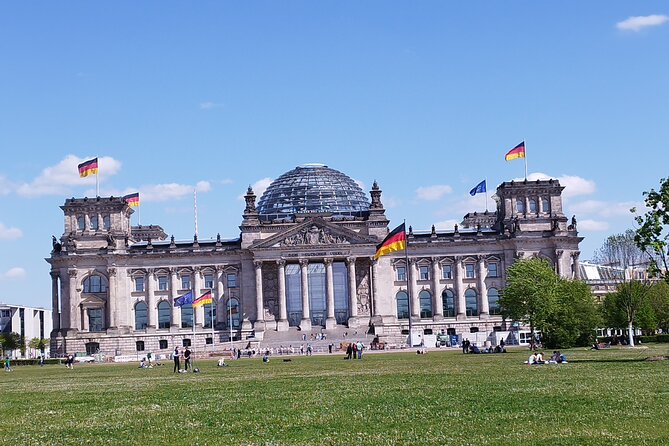
The final portion also includes the Memorial to the Murdered Sinti and Roma and the government district, with the Reichstag, Bundestag, and Chancellery. These sights bring the tour back to the modern political center.
Because the route ends back at Weinbergsweg 6, you will not be left at Brandenburg Gate. That return is convenient, though it means the final ride back is part of the four-hour schedule.
What the guide adds to the ride
The guide is more than a driver. You can expect explanations at each stop, help with orientation, and a steady stream of local detail while the rickshaw moves between sights.
Levi is named in the tour material and is described as friendly, flexible, and skilled at maneuvering the vehicle. A good example of the service comes from a rainy outing when he pulled over during a storm and continued explaining Berlin. The rickshaw roof and provided blanket helped keep the ride comfortable.
That does not mean the weather is irrelevant. Berlin rain can still affect the mood, visibility, and time spent outside. Bring suitable clothing rather than relying only on the blanket.
One useful detail is the guide’s willingness to adapt. The route can include extra photo stops, and the guide may take pictures for you. If you have a concert, meal, or other timed plan afterward, tell the guide at the start so you understand how much flexibility the schedule allows.
WiFi, bottled water, and alcoholic beverages are listed as included. The most useful of these on a sightseeing route is likely the water and the ability to stay connected. Alcohol may not matter to every visitor, and it should not be the reason to choose the tour.
Price, timing, and practical value
The listed price is $216.74 per group of up to two people. A daily First Rickshaw promotion is also shown at €90 for a public group combi vehicle, so check the exact price and vehicle type when booking. The pricing information suggests that the offer may vary by date or product.
For two people, $216.74 works out to about $108 per person. That is a significant cost for four hours, but the comparison should be with a private car tour or personal guide rather than a public bus. You receive door-to-door-style movement between major sights, a very small group, photo stops, and a route designed around central Berlin.
The price is harder to justify if you mainly want museum interiors. Admissions are not included, and most stops last only five to 15 minutes. You are buying an overview and comfortable transport, not a series of full guided visits.
An early start is smart. A 9:00 a.m. departure was specifically recommended by the guide because the major sights are less crowded then. Morning light can also help with photos, though the tour operates in changing weather.
Free cancellation is available if you cancel at least 24 hours before the start time. Changes or cancellations inside that window are not accepted for a refund.
Who should book this Berlin rickshaw tour?
I would consider this tour for a first visit when you want to understand Berlin’s layout before choosing which sites deserve more time. It also suits couples, parents, and anyone who prefers not to walk long distances between widely separated landmarks.
The format is especially helpful for people with limited mobility. The vehicle can stop close to monuments, and you can see many sights without getting out each time. The experience is not described as wheelchair accessible, so contact the provider directly if that is essential for you.
You should choose something else if you want long museum visits, a large historical lecture, or a low-cost group excursion. The route moves quickly, and the most serious memorials deserve more time than the schedule allows.
Should you book it?
Book this rickshaw tour if you value personal guiding, easy transport, and broad coverage more than museum entry. You will see the main central sights, hear how Berlin’s royal, Nazi, Cold War, and reunited eras connect, and avoid the fatigue of crossing the city on foot.
I would book it early in the trip, ideally for a 9:00 a.m. departure. Use the ride to mark places you want to revisit, such as the Topography of Terror, Museum Island, or the Holocaust Memorial information center.
Skip it if the price feels high for short stops or if you prefer to explore each site at your own pace. For the right visitor, though, the rickshaw is a comfortable and unusually efficient way to get your first clear picture of Berlin.
FAQ
Where does the Berlin rickshaw tour start?
The tour starts at Weinbergsweg 6, 10119 Berlin, Germany.
Where does the tour end?
The activity ends back at the meeting point on Weinbergsweg.
How long does the tour last?
The tour lasts approximately four hours.
How many people can join?
The tour has a maximum of two people. Extra rickshaws can be added for larger groups.
Is the tour suitable for people with limited mobility?
The tour is described as suitable for less mobile people because you only need a few steps to enter the rickshaw, and the vehicle can stop close to monuments. Specific wheelchair access is not provided.
Are attraction admission fees included?
The outdoor stops are listed as free, while admission to the Berliner Fernsehturm is not included. The tour does not include entry to the museums on Museum Island or other indoor attractions.
What is the cancellation policy?
You can cancel for a full refund up to 24 hours before the experience begins. Cancellations or changes made less than 24 hours before the start time are not accepted for a refund.
Newest Berlin reviews
- Where It All Began: Berlin’s Queer & Trans History Tour★ 4.9 · 6 reviews
- Understanding Kreuzberg: The roots of local (sub)culture★ 4.9 · 11 reviews
- Berlin: guided canoe | kayaktour★ 4.1 · 7 reviews
- Private Potsdam City Tour in an authentic vintage van★ 5.0 · 14 reviews
- Warnemünde Shore Excursion: Private Sachsenhausen and Berlin Tour★ 5.0 · 12 reviews
- Ultimate E-Bike Tour of Berlin with Beer Garden Stop★ 5.0 · 4 reviews
- Private Walking Tour of Potsdam and Sanssouci★ 5.0 · 24 reviews
- Potsdam Highlights – Private sightseeing tour by minibus★ 5.0 · 3 reviews
Berlin Rickshaw Tours, compared.
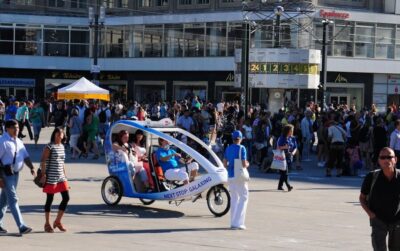
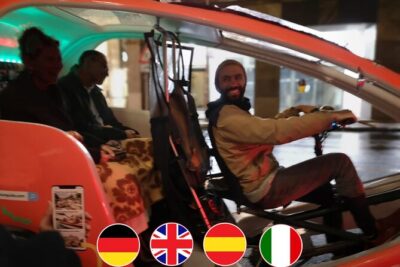
Individual City Tour – Rickshaw Sightseeing in Berlin
Read our review →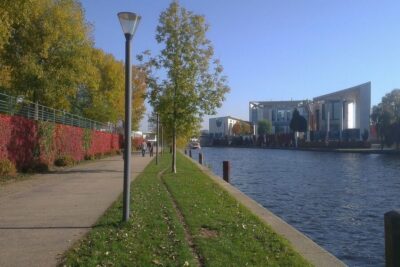

Rickshaw Tours Berlin – Groups of up to 16 people with several rickshaws
Read our review →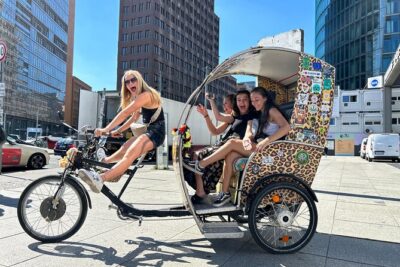
One Up to 3 Rickshaws(6 GUESTS)-Taylor Made Rickshaw Berlin Tour
Read our review →
Berlin Rickshaw Tours Historical & Photo City Tour 120min – Sightseeing
Read our review →Browse the lists this tour appears in