
Reviewed · BERLIN BIKE TOURS
Half-Day Bike Tour of Berlin’s Lesser Known And Historical Sites
Berlin’s famous sights tell only part of the story. This four-hour bike ride takes you through former East Berlin, past Communist-era housing, old slaughterhouse and brewery sites, the huge Stasi headquarters, a former border crossing, and several inner-city lakes. It is a good way to see how ordinary people lived behind the Wall.
I like the small maximum of eight people, which gives you room to ask questions and makes it possible for the guide to adjust the conversation. I also like the route’s quiet mix of history and greenery. The main drawback is simple: this is not a greatest-hits tour, so you will not see the Brandenburg Gate, Museum Island, or the Holocaust Memorial.
Key points to know before booking
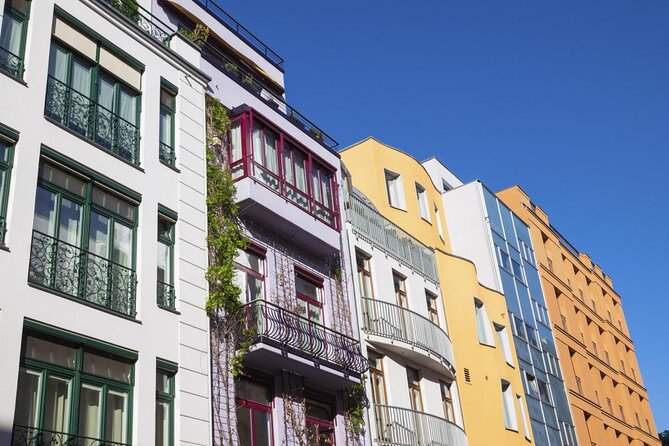
- Cold War Berlin in daily-life detail: See apartment blocks and former GDR neighborhoods rather than only famous monuments.
- A very small group: Bookings are limited to eight people, and the tour may run with only two participants.
- Guides with a personal connection: Katrin, Markus, and Ferenz have led tours praised for clear explanations, humor, and firsthand stories.
- A surprisingly green route: Prenzlauer Berg, Lichtenberg, Weissensee, Orankesee, and Obersee bring parks and lakes into the history lesson.
- A moderate four-hour ride: The route is described as relaxed and suitable for teenagers, students, and most people able to cycle.
- Good value at $36.88: Your fee includes the bicycle and guide, but not food, drinks, or hotel transport.
Why this route shows a different Berlin
Many first visits to Berlin concentrate on the city center. That makes sense, but it can leave you with a polished picture of the capital and little sense of how East Berlin worked as a place to live.
This route heads east and north from Bornholmer Strasse. You ride through Prenzlauer Berg, continue toward former Stasi sites and GDR housing districts, then reach Weissensee and its lakes. The distance between sights gives the tour its point. You are not simply stopping at monuments. You are seeing neighborhoods shaped by state planning, industry, division, and reunification.
I especially like the way the tour connects ordinary apartment blocks with larger political events. Cold War history can feel abstract when it is presented only through walls, checkpoints, and speeches. Here, the subject includes where people lived, what the streets looked like, and how a secret-police system reached into daily life.
The route also brings out a side of Berlin that is easy to miss from a train or sightseeing bus. You pass former industrial ground, quiet residential streets, old border infrastructure, and lakes used as local recreation areas. The result is less dramatic than a monument-to-monument tour, but more useful if you want to understand the city beyond its postcard views.
More bike tours in Berlin:
- Berlin: Sights and Highlights Bike Tour with a Local Guide
★ 4.8 · 2,698 reviews - Berlin Highlights 3-Hour Bike Tour
★ 5.0 · 948 reviews - Berlin City Bike Tour with Beer Garden Stop
★ 5.0 · 917 reviews
Starting at Bornholmer Strasse
The meeting point is Bornholmer Str. 75A, 10439 Berlin, with a 10:00 a.m. start. The tour ends back at this same meeting point, so you do not need to arrange a second pickup across town.
Bornholmer Strasse is an apt place to begin. The area is connected to the former border between East and West Berlin, and the tour later includes the Platz des 9. November 1989, another former border station. That gives the day a useful shape: you begin near the old dividing line, then see the eastern districts that grew behind it.
The bicycle is included, as is a driver-guide and local guide. The supplied information does not specify bicycle models, helmet arrangements, or whether electric bikes are available, so ask the operator if any of those details matter to you.
You should arrive ready to ride for about three and a half to four hours. The published duration varies slightly between 3.5 hours and approximately four hours, likely reflecting the pace of the group and the time spent talking at stops.
Prenzlauer Berg and the texture of East Berlin
The first major portion lasts about an hour in Prenzlauer Berg. This is where the tour spends its most substantial amount of time, and that makes sense. The district offers a strong introduction to the contrast between Berlin’s former eastern and western halves.
The focus is not simply on attractive streets or cafés. You learn about daily life during the Cold War, including the character of typical Communist-era apartment blocks and the way East Berlin was organized. The district lets the guide explain the human scale of the GDR: housing, neighborhoods, routines, and the effect of political control on people who were not government officials or famous dissidents.
A guide with local knowledge can make this kind of stop much more useful than a quick photo break. Katrin, Markus, and Ferenz are among the guides associated with this experience, and their approach is described as conversational, humorous, and grounded in personal stories. That matters here because the subject is not only dates and institutions. You want explanations that connect the buildings to real life.
You should also expect some current Berlin mixed with the older story. The tour discusses historical and present-day events together, helping you see how the former East has changed. At the same time, the experience does not promise an extensive walk through interiors or museum galleries. Much of the learning takes place outside, from the bicycle and the street.
Former slaughterhouses, breweries, and working Berlin
Along the route, you pass sites linked to former slaughterhouses and breweries. These are not conventional sightseeing stops, but they add an important piece to the city’s story.
Berlin’s neighborhoods were not built only around government buildings and grand avenues. They also depended on food production, brewing, transport, workshops, and other industries. Former industrial sites help explain why certain areas developed as they did and how urban life was organized before many of these uses disappeared.
The tour’s value here is in the connections. You are not just told that a building once had another purpose. The guide can place it within the larger story of East Berlin, its working districts, and the physical changes that followed reunification.
Do not expect a preserved industrial museum at each location. The itinerary describes passing the former sites, so the appeal is mainly the explanation and the view from the bike. If you prefer long interior visits, this route may feel light on formal attractions. If you like seeing how a city functions, these brief references should add depth.
More half-day trips in Berlin:
- Discover Berlin Half-Day Walking Tour
★ 5.0 · 9,624 reviews - Berlin Third Reich Sites: Half-Day Walking Tour
★ 5.0 · 835 reviews - Potsdam Half-Day Walking Tour from Berlin
★ 4.5 · 398 reviews - Berlin Private Half-Day Walking Tour: Discover the German Capital’s History
★ 5.0 · 244 reviews
The Stasi headquarters and former prison
The former Stasi headquarters and prison provide the route’s strongest political subject. The Ministry for State Security, known as the Stasi, operated an extensive system of surveillance, informers, and internal control in East Germany. The tour explains the size and reach of that system while showing you the physical setting where it operated.
The headquarters was enormous, and that scale is part of the lesson. A secret-police network can sound like an invisible force when described in a textbook. Facing the former complex gives it a physical presence. You see the institutional setting and learn how informers and state officers shaped life in East Berlin.
The itinerary lists the Stasi Museum and former Stasi prison as a very brief stop of about five minutes. That is important. You should expect an exterior-focused explanation or a short look at the site, not a full museum visit with time for exhibits. Admission is listed as free, but the schedule does not allow for a lengthy indoor tour.
For a fuller visit to the museum or prison, you would need to return separately. On this bike tour, the purpose is to place the Stasi within the wider route and connect it with the neighborhoods and housing areas you have already seen.
Ernst-Thälmann-Park and GDR planning
The stop at Ernst-Thälmann-Park lasts about ten minutes. It combines a GDR-era park and housing area with a planetarium, giving you another way to see how the East German state shaped public space.
This is a useful stop because it moves the discussion away from surveillance alone. A government also expresses its values through housing, parks, public buildings, and leisure facilities. The layout shows how a planned neighborhood could combine homes with open areas and public amenities.
Ten minutes is enough for an explanation and a quick look, but not for a full exploration of the park or planetarium. The short visit works best as part of the continuous route. You get another piece of the urban puzzle without losing too much riding time.
The tour also passes an athletic facility where famous Olympic athletes trained. The supplied details do not name the facility, so you should treat it as an additional point of interest rather than a guaranteed extended stop. It fits the wider theme of GDR public institutions, sport, and state identity.
The former border station at Platz des 9. November 1989
At the Platz des 9. November 1989, you pause for about 15 minutes at a former border station and Berlin Wall site. The date refers to the fall of the Wall, making this a natural place to connect the personal experience of movement restrictions with the events that ended them.
The strength of this stop is its position within the route. After riding through former East Berlin neighborhoods, you encounter a physical reminder that these districts were once separated from the rest of the city. You can better understand why a simple crossing point mattered so much.
The stop is short, and no food, drinks, or extended museum visit is included. Still, a focused explanation at a former border location can do more than a rushed visit to several major monuments. You have already spent time seeing the city behind the old border, so this moment helps tie the geography together.
Orankesee, Obersee, and Weissensee
The tour then moves into a greener part of eastern Berlin. Orankesee and Obersee are small inner-city lakes, with stops of about five minutes each. These pauses are brief, but they change the feel of the ride after the heavier political subjects.
The lakes show that East Berlin was not only apartment blocks, offices, and security buildings. Local recreation areas and open water formed part of everyday life. They also provide a calmer setting for a rest and a chance to take in the route without another major lecture.
Weissensee receives about 45 minutes, making it one of the longer sections after Prenzlauer Berg. The district and lake offer a strong contrast to the Stasi headquarters and border sites. Here, you see a residential area and an inner-city lake rather than a formal memorial.
The final stop is Strandbad Weissensee, visited for about ten minutes. The information does not say that swimming is included or that the tour provides beach access, so think of this as a brief look at the lake and its recreational setting. The appeal is the combination of cycling, local scenery, and social history.
This part of the route is also why the ride feels manageable rather than grim. You spend time with serious subjects, but the day includes open space and quieter streets. Several German-language descriptions call the cycling relaxed, and the route is presented as suitable for teenagers and students. You still need to be comfortable riding for several hours.
What the small group changes
The maximum group size is eight people. That is one of the clearest advantages of the experience.
A small group makes street-side explanations easier to follow and gives you a better chance to ask about a particular building or historical detail. It also lets the guide notice if the group needs a slower pace or a short pause. The tour may operate with only two participants, since no minimum group size is promised for the regular departure.
The named guides bring different personalities. Katrin is described as fun, accommodating, and rhetorically strong. Markus is associated with a relaxed, humorous style and with adapting the route’s emphasis when participants had already seen Berlin’s major historical sites. Ferenz is described as especially customer-focused, including on a departure with only two people.
You should not assume that every guide will tell the same stories in the same order. That variation is normal in a small guided experience. The consistent advantage is the chance for conversation rather than a fixed script delivered to a large crowd.
Price, pace, and practical value
At $36.88 per person, this is reasonably priced for about four hours when the bicycle and guide are included. You are paying for a guided route through several districts, historical interpretation, and equipment, not for admission to major attractions.
The value is strongest if you have already seen central Berlin or if you want a better sense of East Berlin beyond the Wall memorials. A standard sightseeing bike ride might cover more famous places. This one spends its time on neighborhoods, former industries, state institutions, and lakes.
Food and drinks are not included, so bring what you need for the morning. Hotel pickup and drop-off are also not included. The start is near public transportation, and the return to the same meeting point makes the day easier to plan.
Dress is listed as smart casual, but practical cycling clothing matters more than looking formal. Children must be accompanied by an adult. Most people can participate, although the tour is still a bicycle ride of several hours, not a short city transfer.
Free cancellation is available if you cancel at least 24 hours before the start time. Changes or cancellations inside that period are not accepted for a refund. The activity requires a minimum number of participants, and if the operator cancels for that reason, you are offered another date or experience, or a full refund.
Who should book this Berlin bike tour
I would choose this tour if you want history tied to real neighborhoods. It suits repeat visitors, people interested in the GDR and Cold War, and anyone who prefers a local district to another pass by the Brandenburg Gate.
It is also a good fit for families with older children and teenagers who can manage the ride. The mix of cycling, lakes, parks, housing, and political history keeps the day from feeling like a long lecture.
I would be more cautious if this is your first and only Berlin sightseeing experience. You will miss most of the city center’s famous sights, and the Stasi stop is too short for a complete museum visit. Consider doing the major central attractions first, then use this ride to add context.
Should you book it?
Book it if you want a small, relaxed ride through the eastern districts and care more about how Berlin lived than how it poses for photographs. The route is specific, thoughtful, and different from the usual central-city circuit.
Skip it if you want long museum visits, famous landmarks, or a short and effortless outing. For the right reader, $36.88 buys a useful four-hour introduction to Cold War neighborhoods, former state power, industrial Berlin, and the greener side of the city.
FAQ
How long is the bike tour?
The tour lasts approximately four hours, with the experience also described as about 3.5 hours.
Where does the tour start?
It starts at Bornholmer Str. 75A, 10439 Berlin, Germany.
What time does the tour begin?
The scheduled start time is 10:00 a.m.
Where does the tour end?
The tour ends back at the meeting point.
Is the bicycle included?
Yes. Use of a bicycle is included in the tour price.
How large is the group?
A booking can include a maximum of eight people, and the activity also has a maximum of eight participants.
Are food and drinks included?
No. Food and drinks are not included.
Can children join the tour?
Yes, but children must be accompanied by an adult.
What is the cancellation policy?
You can cancel at least 24 hours before the start time for a full refund. Cancellations or changes made less than 24 hours before the start are not accepted for a refund.
More history tours in Berlin
- Berlin: Natural History Museum Entrance Ticket
★ 4.6 · 3,382 reviews - Berlin: World Heritage Cruise to Potsdam
★ 4.5 · 1,435 reviews - Berlin Historical Highlights Walking Tour
★ 4.9 · 657 reviews - Berlin Private Complete History All Day Walking Tour
★ 5.0 · 474 reviews
Newest Berlin reviews
- Where It All Began: Berlin’s Queer & Trans History Tour★ 4.9 · 6 reviews
- Understanding Kreuzberg: The roots of local (sub)culture★ 4.9 · 11 reviews
- Berlin: guided canoe | kayaktour★ 4.1 · 7 reviews
- Private Potsdam City Tour in an authentic vintage van★ 5.0 · 14 reviews
- Warnemünde Shore Excursion: Private Sachsenhausen and Berlin Tour★ 5.0 · 12 reviews
- Ultimate E-Bike Tour of Berlin with Beer Garden Stop★ 5.0 · 4 reviews
- In the Forbidden City – Potsdam Walking Tour★ 5.0 · 17 reviews
- Private Walking Tour of Potsdam and Sanssouci★ 5.0 · 24 reviews
Berlin Bike Tours, compared.
Sights and Highlights Bike Tour with a Local Guide
Read our review →
Berlin Highlights Sightseeing Bike Tour in Small Groups
Read our review →
Alternative Bike Tour of Kreuzberg & Friedrichshain
Read our review →
Guided Bike Tour of the Berlin Wall and Third Reich
Read our review →
Browse the lists this tour appears in