
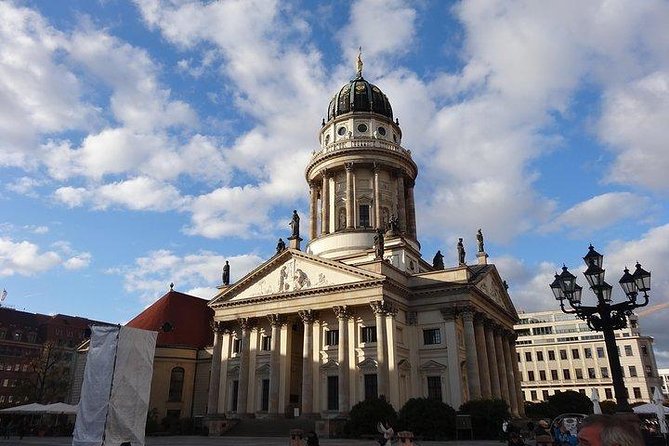
Reviewed · 1-DAY TOURS
Berlin in one day – day tour with an expert guide
Berlin’s story is unusually concentrated in the center of the city. On this six-hour private walking tour, you move from Prussian power to Nazi terror, then through the divided city of the Cold War. The route links famous sights with harder-to-see traces, including watchtowers, ghost stations, escape stories, and the marks left by the Battle of Berlin.
I like two things right away. Your guide can shape the day around your interests, and the private format means you are not trying to keep up with a large group. I also like the sheer range: Brandenburg Gate, Checkpoint Charlie, the Berlin Wall, Museum Island, the Reichstag area, and the Soviet War Memorial all fit into one tightly planned outing.
The tradeoff is simple: this is a walking tour with no private vehicle. Six hours on foot can be tiring, and the long list of subjects means some places may be viewed from outside rather than explored at length. You get a strong first look, not a leisurely museum day.
Key points at a glance

- A private six-hour route through Mitte: Only your group participates, allowing the guide to adjust the emphasis and pace.
- Berlin’s twentieth-century story in one walk: The tour connects World War I and World War II, the Battle of Berlin, Nazi persecution, the Berlin Wall, and the Cold War.
- Major sights plus overlooked details: Expect Brandenburg Gate, Checkpoint Charlie, Museum Island, watchtowers, ghost stations, and escape stories.
- English-speaking local guidance: The experience is offered in English, and Julian is one guide specifically praised for creating a structured, detail-filled day.
- No tour vehicle: Hotel pickup is on foot, and private transportation is not used.
- Strong cancellation flexibility: You can receive a full refund if you cancel at least 24 hours before the start time.
Why this walking route works for a first day in Berlin
Berlin can feel confusing at first because its most important sights belong to different eras. A grand boulevard may point to Prussian monarchy, a vacant stretch may mark the former Wall, and an ordinary street corner may carry a grim wartime story.
This tour gives those places a common thread. Instead of seeing the Brandenburg Gate as just a postcard stop, you can place it inside the history of divided Berlin and the events surrounding the end of World War II. Instead of treating Checkpoint Charlie as a single photo opportunity, you can connect it to the practical reality of crossing between East and West.
The private format matters here. The supplied price is $294.72 per person, which is a serious outlay for six hours. It makes more sense for a couple, family, or small group that values a personal guide and wants to fit a lot into one day. If you are happy with a large group or prefer to explore at your own pace, the price may feel high.
The tour is also booked, on average, 22 days ahead. That suggests you should reserve before arriving if the date matters, especially if you want a guide who can tailor the route to your interests.
More day trips from Berlin:
- Berlin Complete in one day
★ 5.0 · 222 reviews - From Berlin: Sachsenhausen Concentration Camp Day Trip
★ 4.7 · 52 reviews - Private Tour: Potsdam Day Trip from Berlin
★ 4.5 · 43 reviews
Starting at Ebertstraße and meeting your guide

The listed start point is Ebertstraße 24, 10117 Berlin, near the central sights of Mitte. The guide is scheduled to pick you up on foot from your hotel lobby five minutes before the tour, so you should have your party ready rather than expecting a waiting vehicle.
That detail is important. This is not a sightseeing circuit with a van or minibus. Private transportation is not included because no vehicle is used during the tour. You will walk between locations, pause for explanations, and move through the city at street level.
The precise hotel pickup arrangement is worth checking when you book, particularly if you are staying outside central Berlin. The published information gives the meeting point and says the guide will collect you on foot from the lobby, but it does not promise vehicle pickup or door-to-door transport.
Since the tour lasts about six hours, wear comfortable shoes and bring what you need for changing weather. That is practical advice rather than a special tour requirement. The key point is that the walking is the transport.
Brandenburg Gate and the changing face of Berlin
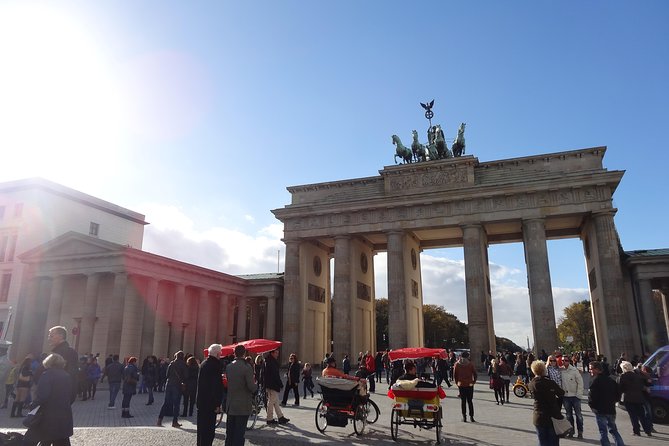
Brandenburg Gate is the natural opening chapter. It is one of Berlin’s best-known landmarks, but the value here comes from hearing how its meaning changed over time.
The gate belongs to the grand ceremonial axis of the city, including Unter den Linden. The tour uses that setting to place Berlin’s political past beside its twentieth-century crises. You can expect the guide to explain the gate in relation to war, dictatorship, division, and reunification rather than treating it as a stand-alone monument.
Unter den Linden adds scale to the story. This broad historic avenue leads toward major institutions and public buildings, including Humboldt University. It gives you a sense of how Berlin presented power, learning, and national identity before the city was torn apart by war and then split by ideology.
The benefit of seeing these sights with a guide is context. On your own, you may photograph the columns, the avenue, and nearby buildings without grasping how closely the area is tied to Berlin’s political life.
World War I, World War II, and the Battle of Berlin
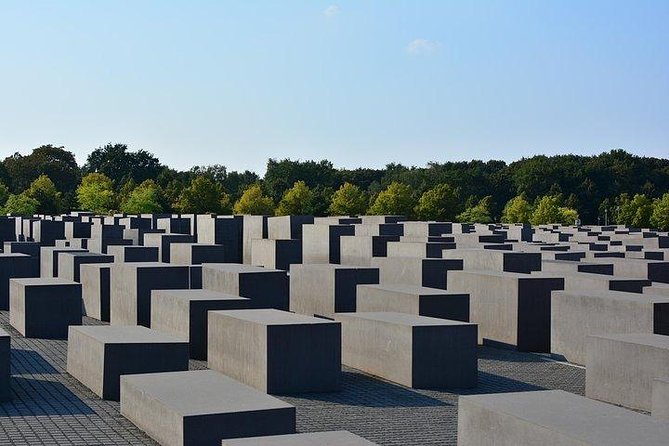
The route covers both world wars, with particular attention to the final Battle of Berlin. That is a valuable distinction. Berlin’s wartime story was not simply a backdrop to events elsewhere. In 1945, the city itself became the central battlefield of the collapsing Nazi regime.
A retrospective of the Battle of Berlin can help you read the city’s open spaces and remaining structures differently. It also creates a bridge to the postwar division that followed. The destruction of the Nazi capital did not end Berlin’s troubles. It left a damaged city divided among victorious powers, setting the stage for the Cold War.
The tour also includes the Topography of Terror area. This site focuses on the institutions of Nazi persecution and terror. The subject is difficult, and the best approach is to allow time for the guide’s explanation rather than rushing through it as just another stop.
You should understand that six hours cannot provide a full museum visit at every location. The value is in the connected narrative. If you want long indoor visits with time to read every panel, reserve separate museum time.
Other Berlin experiences to weigh up
- Berlin: Reichstag, Dome and Government District Guided Tour
★ 4.7 · 18,288 reviews - Berlin: Government District around the Reichstag Guided Tour
★ 4.7 · 8,447 reviews - Berlin: Hidden Backyards Guided Walking Tour
★ 4.8 · 5,360 reviews - Berlin: 1-Hour Boat Tour with Bilingual Live Guide
★ 4.7 · 3,629 reviews
Remembering Europe’s murdered Jews
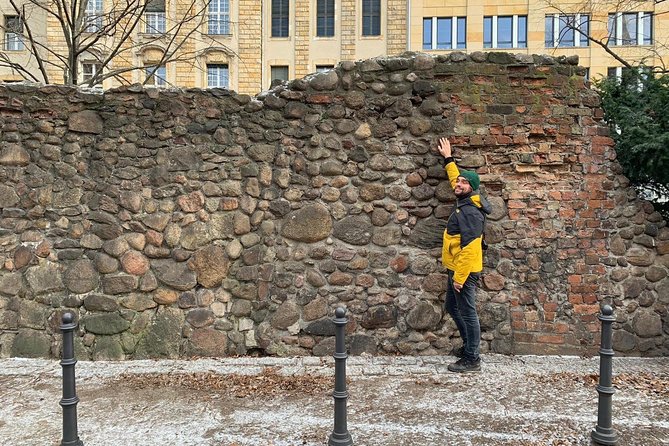
The program includes the Memorial to the Murdered Jews of Europe, described here as remembering Europe’s murdered Jews. Its field of concrete stelae is deliberately difficult to read at a glance. As you move through it, the ground shifts and the columns change in height, creating a powerful sense of unease and disorientation.
A guide can help you approach the memorial with care and explain its place in Berlin’s public memory. This is not a stop to rush through while checking off a list. It is one of the points where the tour’s historical subjects become personal and immediate.
The surrounding area also shows how closely Berlin places memorials beside ordinary city life. You may pass government buildings, streets, and modern development within a short walk. That contrast is part of the experience, but do not expect a quiet retreat or a long contemplative visit built into the schedule.
Checkpoint Charlie and the Berlin Wall
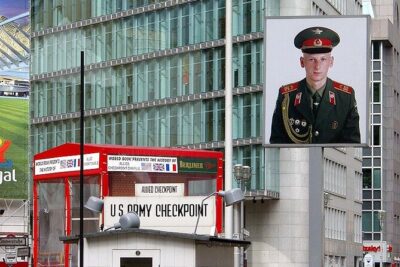
Checkpoint Charlie is one of the city’s most recognizable Cold War locations. It marks the former crossing point between East and West Berlin and brings the abstract idea of a divided city down to a street crossing.
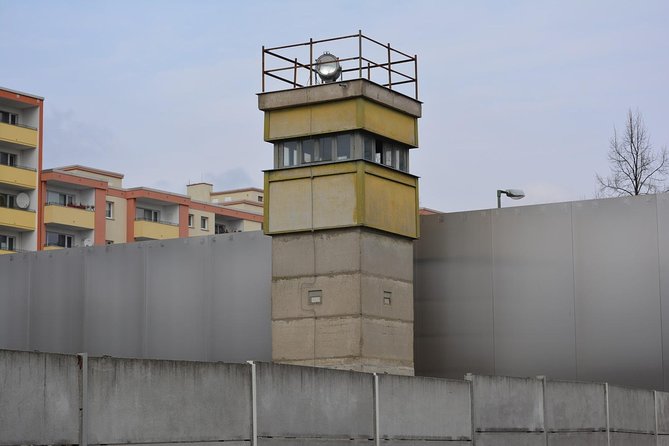
The guide can explain how movement was controlled, why this checkpoint became such a visible symbol, and how escape attempts shaped the lives of people on both sides. The tour specifically includes escape stories, watchtowers, ghost stations, and the Wall’s broader role in daily life.
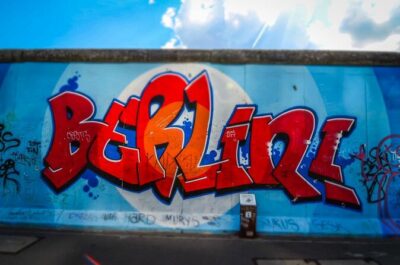
You will also see the Berlin Wall Memorial and other Wall-related sites. These are useful alongside Checkpoint Charlie because they show more than the famous checkpoint image. The Wall was not a single barrier with one standard design. It affected neighborhoods, transport routes, families, workplaces, and the ordinary act of crossing town.
The tour also covers divided Berlin, including East versus West. That comparison is one of the strongest reasons to take a guide. The physical border has largely disappeared from the city center, so you need explanation to understand where it ran and what it meant.
Watchtowers, ghost stations, and escape stories
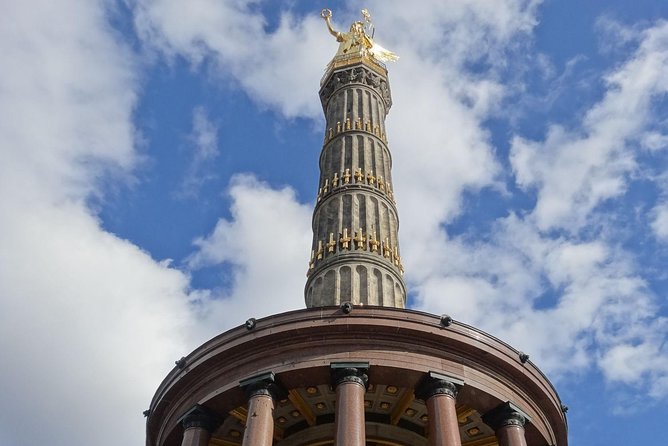
This is where the route promises something more than a standard highlights walk. Berlin’s Cold War history survives in fragments: former watchtowers, sealed or bypassed stations, and stories of people trying to get through the border.
Ghost stations are especially useful for understanding how division altered the city below street level. Some stations in the eastern part of Berlin were closed to Western trains or heavily controlled, leaving passengers to pass through darkened platforms without stopping. Even when little remains for you to see, the story explains how the Wall changed transport and movement.
Escape stories add a human scale. A map can show a border, but a personal account shows the fear, planning, and ingenuity involved in crossing it. The itinerary specifically includes such stories, though the supplied details do not identify which individual cases will be covered.
This part of the tour may appeal most to people who want the city’s lesser-known details. It also depends heavily on the guide’s ability to bring locations to life, which makes the private format useful.
Museum Island and Humboldt University
Museum Island brings Berlin’s cultural and academic identity into the walk. It is home to major museums and monumental buildings on the Spree, while Humboldt University represents the city’s long intellectual tradition.
The tour lists Museum Island and Humboldt University among its stops, but it does not promise admission to a particular museum or a scheduled interior visit. The included admission ticket is not specified by name, so ask for clarification if entering a museum is essential to your plans.
That limitation does not make the area unimportant. A guide can point out the relationship between the museums, university, avenue, and government center. You get a stronger sense of Berlin as a city of ideas and institutions, not only a place defined by war and division.
Still, plan a separate museum visit if you want to see collections properly. Six hours already covers a wide route, and a short stop outside cannot replace time inside a major museum.
Soviet War Memorial and the end of the war
The Soviet War Memorial is another important piece of the 1945 story. It commemorates Soviet soldiers who died in the battle for Berlin and reflects the political order that followed the defeat of Nazi Germany.
This stop helps balance the tour’s focus. You are not looking only at German memory or only at the Wall. You are also seeing how the Soviet victory was represented in the city and how that memory influenced East Berlin.
The memorial’s scale gives the guide room to explain the military and political aftermath of the war. It also links neatly to the later division between East and West, since Berlin became a front line in the conflict between Soviet power and the Western Allies.
As with other outdoor sites, the experience depends on the explanation. The monument itself is large and formal, but its meaning is not obvious to everyone arriving without context.
A guide who adjusts the day to your interests
The clearest advantage of a private tour is flexibility. One guest may care most about World War II and the Battle of Berlin. Another may want the Wall, escape attempts, ghost stations, and East versus West. A third may be drawn to architecture, Humboldt University, or Museum Island.
The guide can adjust the emphasis instead of delivering the same fixed speech to a large crowd. Julian is specifically praised for making the day structured and informative while checking that points of interest were not missed. That suggests a good match for someone who wants both organization and room for questions.
The experience is offered in English. One short comment also describes the tour in German, but the listed offering is English, so English should be your planning assumption.
Because the activity is private, only your group participates. That makes it easier to pause, ask for clarification, or tell the guide that you need a shorter explanation at one stop and more detail at another. It does not guarantee a particular guide, however, so Julian’s availability should not be assumed unless confirmed at booking.
What the $294.72 price really buys
At $294.72 per person, this is not a budget introduction to Berlin. You are paying for a local guide, a private group, a long walking route, and a day shaped around your interests.
The value improves when two conditions apply. First, you have only one day and want a clear orientation to Berlin’s major historical areas. Second, you are traveling with people who prefer personal attention over a large group format.
The price is harder to justify if you mainly want photographs of Brandenburg Gate and Checkpoint Charlie, or if you plan to spend most of the day inside museums. You could see several central sights independently, though you would lose the connected explanation and the lesser-known stories.
Admission is listed as included, but no specific attraction is identified. Do not assume the price covers entry to every museum or memorial in the city. Ask what the admission ticket covers if an interior visit matters to you.
Who should book this Berlin day tour?
I would choose this tour for a first visit, a short stay, or a private group with different interests. It is especially useful if you want to understand how Berlin moved from imperial capital to Nazi center, then to a divided Cold War city.
It also suits families and mixed-age groups better than a rigid public tour may, since the guide can adjust the pace and subject matter. The activity information says most people can participate, and service animals are allowed. It is near public transportation, though the tour itself does not use a vehicle.
I would think twice if you dislike long walks, want extensive museum time, or prefer discovering a city without a guide. The route covers a lot, and that breadth comes with limited time at each place.
Free cancellation is available if you cancel at least 24 hours before the local start time. Changes or cancellations made inside that window are not accepted for a refund, so keep the cutoff in mind when fixing your plans.
Should you book it?
Book this tour if you want Berlin’s main historical sights tied into one understandable story, and if the private format is worth the added cost to you. The strongest features are the customized route, the English-speaking local guide, and the mix of famous places with watchtowers, ghost stations, and escape stories.
Skip it if your priority is low cost, relaxed pacing, or long museum visits. For the right group, though, six hours on foot can save you days of trying to piece Berlin together on your own. Reserve early if your schedule is fixed, since the tour is commonly booked more than three weeks ahead.
FAQ
Where does the tour start?
The listed start point is Ebertstraße 24, 10117 Berlin, Germany.
Does the guide pick me up from my hotel?
The guide will pick you up on foot from your hotel lobby five minutes before the tour.
Does the tour use a private vehicle?
No. Private transportation is not used during this experience.
How long does the tour last?
The tour lasts approximately six hours.
Is this a private tour?
Yes. Only your group participates.
What language is the tour offered in?
The tour is offered in English.
Is admission included?
An admission ticket is listed as included, but the specific attraction covered is not identified in the available details.
Can service animals participate?
Yes. Service animals are allowed.
Can I cancel for a full refund?
Yes, if you cancel at least 24 hours before the experience start time. Cancellations or changes made less than 24 hours before the start time are not accepted for a refund.
Newest Berlin reviews
- Where It All Began: Berlin’s Queer & Trans History Tour★ 4.9 · 6 reviews
- Understanding Kreuzberg: The roots of local (sub)culture★ 4.9 · 11 reviews
- Berlin: guided canoe | kayaktour★ 4.1 · 7 reviews
- Private Potsdam City Tour in an authentic vintage van★ 5.0 · 14 reviews
- Warnemünde Shore Excursion: Private Sachsenhausen and Berlin Tour★ 5.0 · 12 reviews
- Ultimate E-Bike Tour of Berlin with Beer Garden Stop★ 5.0 · 4 reviews
- In the Forbidden City – Potsdam Walking Tour★ 5.0 · 17 reviews
- Private Walking Tour of Potsdam and Sanssouci★ 5.0 · 24 reviews
1-Day Tours, compared.
Private Day Trip to Potsdam from Berlin by Train
Read our review →
Potsdam Day Trip from Berlin with a Local: Private & Personalized
Read our review →
Day trip through multicultural city landscapes & photo highlights
Read our review →Browse the lists this tour appears in