
Reviewed · BERLIN BIKE TOURS
Berlin (E)Bike Tour Historical Highlights in Small groups
Berlin’s historic center is spread out, and this small-group e-bike tour covers it far faster than walking. In 210 minutes, you ride from the TV Tower and Museum Island to Checkpoint Charlie, the Berlin Wall, Brandenburg Gate, and the Reichstag, with a guide explaining what you are seeing along the way.
I like two things here. First, the rickshaw option lets a grandparent, young child, or less-mobile companion join the same outing without being left behind. Second, the route gives you a useful first look at Berlin’s big stories, from Nazi terror and the Holocaust to the Cold War and modern Germany.
The main caution is that the equipment and organization may not always be equally smooth. One poor experience involved an e-bike losing power and tense communication about it, while another described the bike handover as chaotic. Ask about the bikes before setting off, and make sure everyone understands who will ride and who will use the rickshaw.
Key points to know before booking
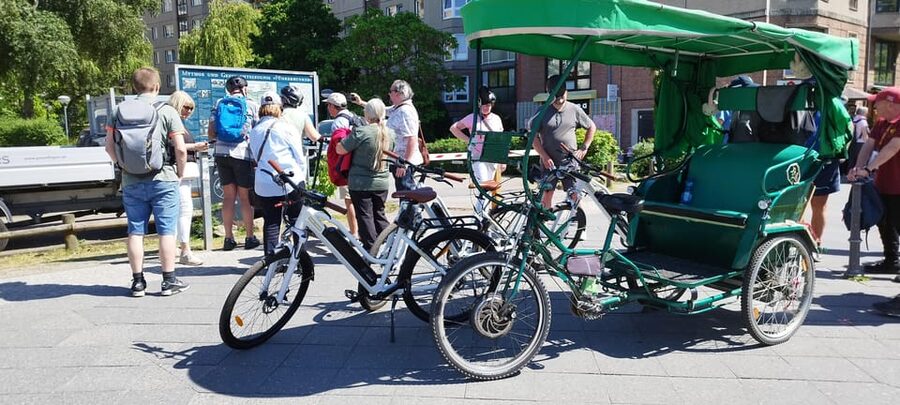
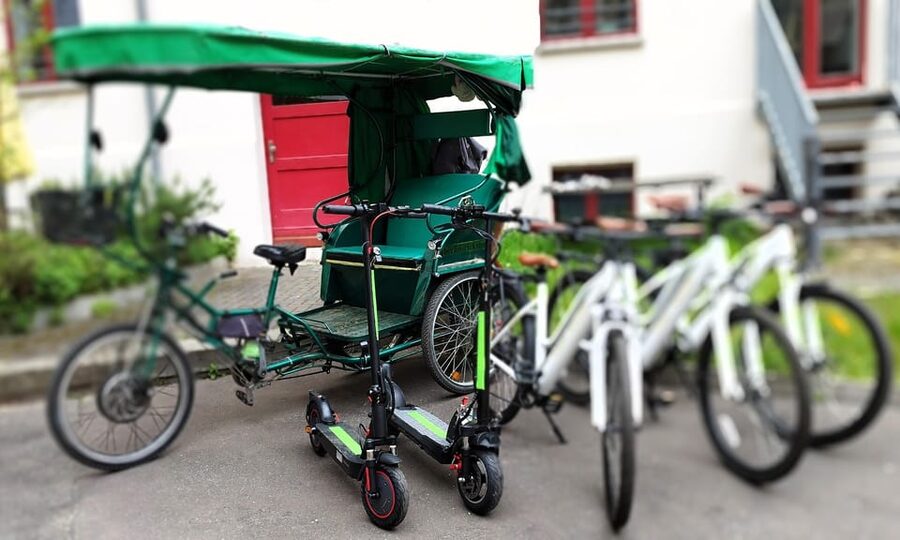
- One route, two ways to ride: You can use an e-bike, while a companion rides in a traditional rickshaw.
- Nearly all the major Mitte sights: The route includes Museum Island, Unter den Linden, Checkpoint Charlie, the Berlin Wall, the Holocaust Memorial, Brandenburg Gate, and the Reichstag.
- A group limit of six: The small size makes it easier to hear the guide and ask questions.
- A useful history overview: The tour links Berlin’s Nazi past, wartime destruction, Cold War division, and present-day capital.
- Photo help is part of the service: Guides make frequent stops and can take pictures for you.
- Good value for a mixed-age group: At $82 per person, the price makes the most sense when it replaces a longer walking day or allows your whole family to tour together.
Why an e-bike helps in central Berlin
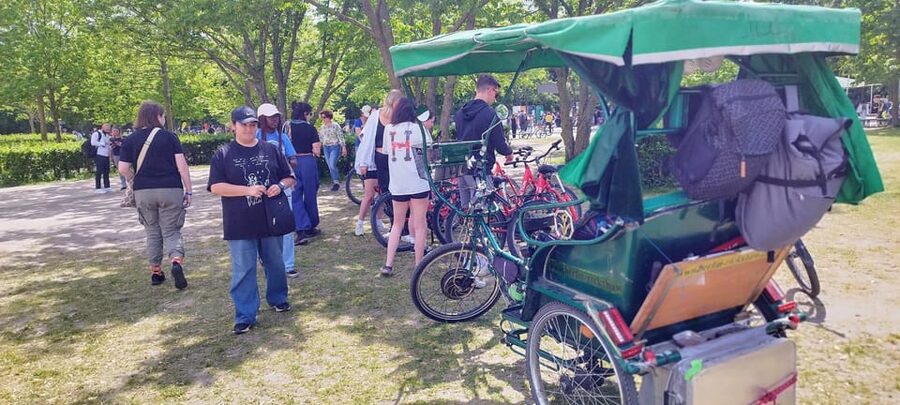
Berlin Mitte looks compact on a map, but its sights are separated by broad avenues and large open spaces. Walking from the TV Tower to the Brandenburg Gate is possible, but it takes time and leaves less energy for the memorials and museums you may want to visit later.
An e-bike gives you a practical middle ground. You still travel at street level and see daily Berlin life, but you cover more ground than you could on foot. The route is designed for comfort and ease, and the guide leads rather than sending you off to navigate alone.
You are not riding through every corner of Berlin. This is a focused tour of central historical sites. That makes it a good choice on your first day, when you want to understand the city’s layout and decide which places deserve a longer visit.
The tour is in English, with a live guide. Levent has led tours in Dutch as well as English, and previous outings with him were praised for his enthusiasm and clear explanations. Jakob was also singled out for giving an excellent tour, though the bike arrangements around his outing were described as less organized.
More bike tours in Berlin:
- Berlin: Sights and Highlights Bike Tour with a Local Guide
★ 4.8 · 2,698 reviews - Berlin Highlights 3-Hour Bike Tour
★ 5.0 · 948 reviews - Berlin City Bike Tour with Beer Garden Stop
★ 5.0 · 917 reviews
Rosenthaler Platz is a handy starting point
The meeting point is Weinbergsweg 6, close to the U-Bahn station at Rosenthaler Platz. This puts you in a lively part of Mitte, with cafes, bars, small shops, street art, and Weinbergspark nearby.
Arrive with comfortable shoes, even though much of the tour is on wheels. You will stop often, get on and off, and spend time standing near monuments. Free bottled water is provided, which is useful on a warm day.
The starting point is not beside the Brandenburg Gate or Reichstag. That is worth noting if you are staying near the government district. On the other hand, Rosenthaler Platz is well connected by public transport and gives you a chance to see a more modern, local side of Mitte before the historical route begins.
The group is limited to six people. That is a meaningful advantage in Berlin, where a large group can get scattered at crossings and crowded monuments. A small group also gives you a better chance to ask about details that interest you, such as Nazi book burning, the Wall, or the rebuilding of Potsdamer Platz.
TV Tower and Museum Island: Berlin’s older center
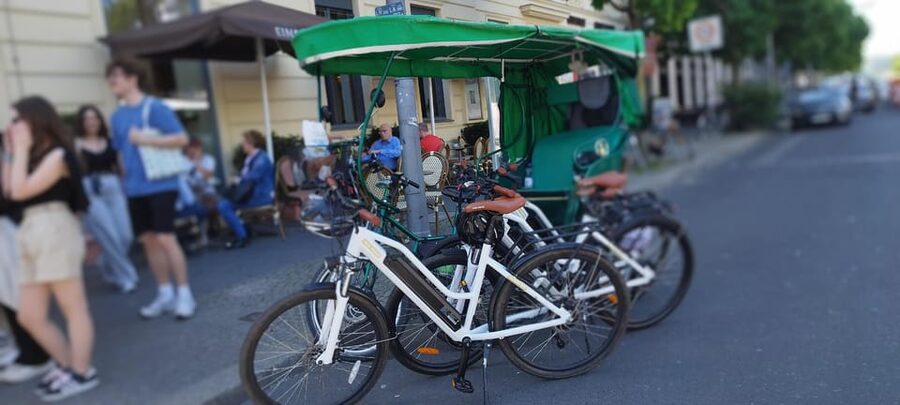
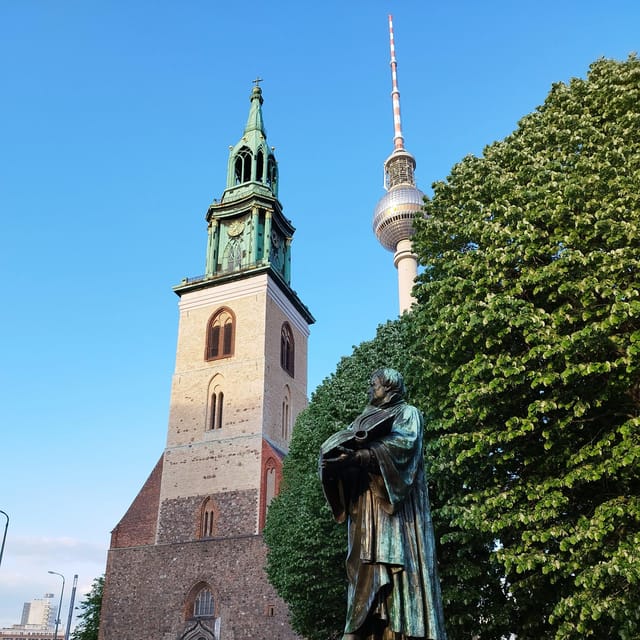
The first sightseeing stop is the TV Tower, Berlin’s unmistakable landmark. Rising from Alexanderplatz, it points you toward the former East Berlin side of the city. You stop for views and photographs rather than going up the tower, so do not book this tour expecting an observation-deck visit.
From there, the route continues toward Museum Island. This group of museums sits on the Spree and includes some of Berlin’s grandest buildings. The tour gives you an outside view and explains the area, but museum admission is not included and there is no extended indoor visit.
That arrangement works well if you want orientation before returning to explore the museums on your own. It is less suitable if your main goal is seeing museum collections. The bike or rickshaw gets you to the area efficiently, but you will need a separate visit for the Pergamon Museum, Neues Museum, or other interiors.
Unter den Linden and the book-burning memorial
Unter den Linden is Berlin’s grand central boulevard, stretching west from the area around Museum Island toward the Brandenburg Gate. From a bike or rickshaw, you can appreciate its length and the concentration of important buildings along it without spending the whole morning walking.
The route includes a stop at the memorial to the Nazi book burning of May 10, 1933. The memorial is easy to miss if you rush along the boulevard. Its location gives the guide a chance to explain how public intimidation and censorship became part of Nazi rule.
This is one of the tour’s strengths. Berlin’s difficult history is not treated as a single stop at one memorial. Instead, the route connects several places, helping you see how political power, propaganda, war, and division shaped the city.
The subject matter is serious. Families with children can still take the tour, but you may want to prepare younger children for discussions of persecution, war, and dictatorship.
More sightseeing tours in Berlin:
- Berlin: 1-Hour City Tour by Boat with Guaranteed Seating
★ 4.3 · 16,993 reviews - Explore Berlin: See All The Iconic Sights & Some Hidden Gems
★ 5.0 · 4,429 reviews - Berlin: City Sightseeing Hop-On Hop-Off Bus Tour
★ 4.1 · 4,233 reviews - Berlin: Hop-On Hop-Off Sightseeing Bus with Boat Options
★ 4.3 · 4,012 reviews
Checkpoint Charlie and the Cold War
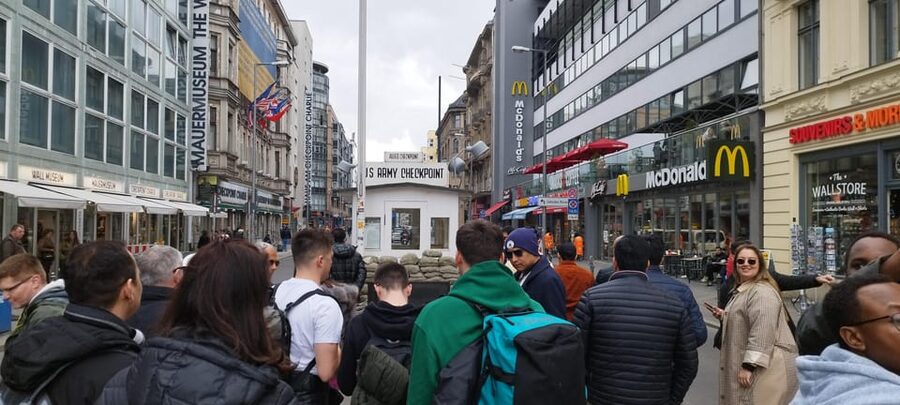
Checkpoint Charlie is one of Berlin’s best-known Cold War symbols. The former crossing point divided the American and Soviet sectors, and the name still carries the tension of a city split between two political systems.
The tour stops for photographs and explanation. You will not spend hours inside a museum here, and the area can feel commercial compared with the historical weight of the site. That contrast is part of the experience: Berlin often places serious history beside souvenir shops, traffic, and ordinary city life.
From the saddle or rickshaw seat, you can take in the surroundings without having to cross central Berlin on foot. The guide helps turn a photo stop into a history lesson, which matters because the checkpoint itself is a small physical marker for a much larger conflict.
Hitler’s bunker and the Topography of Terror
The former Führer bunker is another place where the physical site is less dramatic than its history. There is no grand preserved interior to tour here. The location is largely experienced through the guide’s explanation and the surrounding city streets.
That can surprise people who expect a visible wartime structure. The value is in understanding what happened in the final days of the Nazi regime and how Berlin has chosen to mark, or not visually celebrate, the site.
The Topography of Terror adds more context. It occupies the former headquarters area of the SS and Gestapo and focuses on the machinery of Nazi persecution. The tour includes a photo stop and an outdoor look, not a full museum visit.
If this history interests you, plan time to return to the Topography of Terror independently. The brief stop gives you orientation, but a proper museum visit requires more time than the schedule allows.
Holocaust Memorial and Brandenburg Gate
The Holocaust Memorial is one of the most important stops on the route. Its field of concrete blocks invites you to walk among the changing heights and narrow passages. From a rickshaw, you will see the memorial and hear the explanation, but the experience is different from walking through it yourself.
If mobility allows, ask whether you will have time to step out and enter the memorial area. The tour is moving on a fixed schedule, so do not assume you can explore every part at length.
Nearby, the Brandenburg Gate provides one of Berlin’s great postcard views. It once marked the edge of the city and later became a symbol of division before German reunification. Today, it is one of the easiest places to connect Berlin’s imperial past, Nazi years, Cold War history, and present-day public life.
The guide will pause for photographs. The photo service is a useful touch, especially for couples and families who usually have to take turns behind the camera. Guides are described as capable photographers, though the exact amount of time available for posed pictures can vary with the group and traffic.
Potsdamer Platz and the Berlin Wall
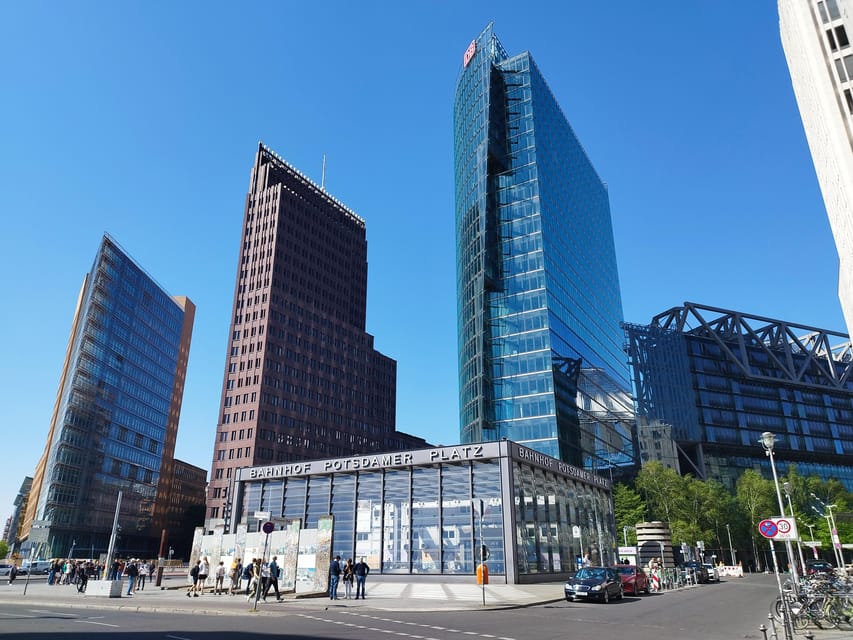
Potsdamer Platz shows how quickly Berlin can change from memorial site to modern city district. Once damaged and divided, it became a major symbol of post-reunification rebuilding. The tour includes it among the central highlights, though the detailed stop sequence may vary depending on traffic and the guide’s handling of the route.
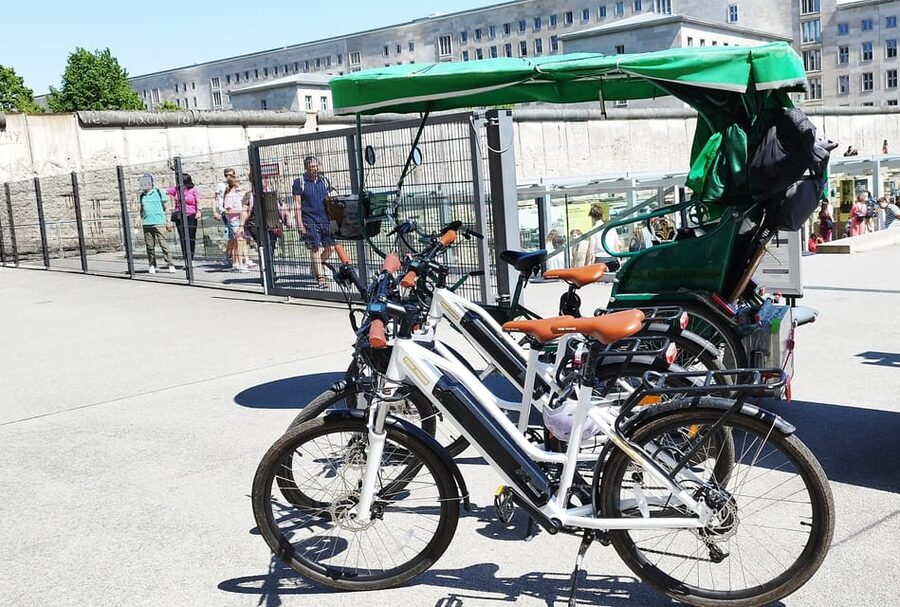
The Berlin Wall section adds the physical reminder of division. Much of the Wall is gone, so you should not expect a continuous barrier surrounding the city. Instead, the guide points out surviving sections and explains their role in the former border system.
This is where traveling by bike or rickshaw helps. The Wall’s former route cuts across different parts of central Berlin, and scattered remains are easy to miss when you are simply walking between major attractions.
Reichstag and the final return
The Reichstag is the seat of Germany’s parliament and one of Berlin’s most recognizable buildings. The tour stops outside for views and photographs. Admission to the dome is not included, and entry requires separate arrangements, so treat this as an introduction rather than a parliament visit.
Seeing the Reichstag after the Brandenburg Gate gives the route a satisfying modern endpoint. You have moved through royal Berlin, Nazi Berlin, divided Berlin, and the democratic capital of today.
The tour then returns to Weinbergsweg 6. Because the outing lasts three and a half hours, you still have time for lunch, a museum visit, or another neighborhood afterward. The return to the same point also makes it easier to leave your day without needing to arrange a second pickup.
Rickshaw comfort for families and less-mobile companions
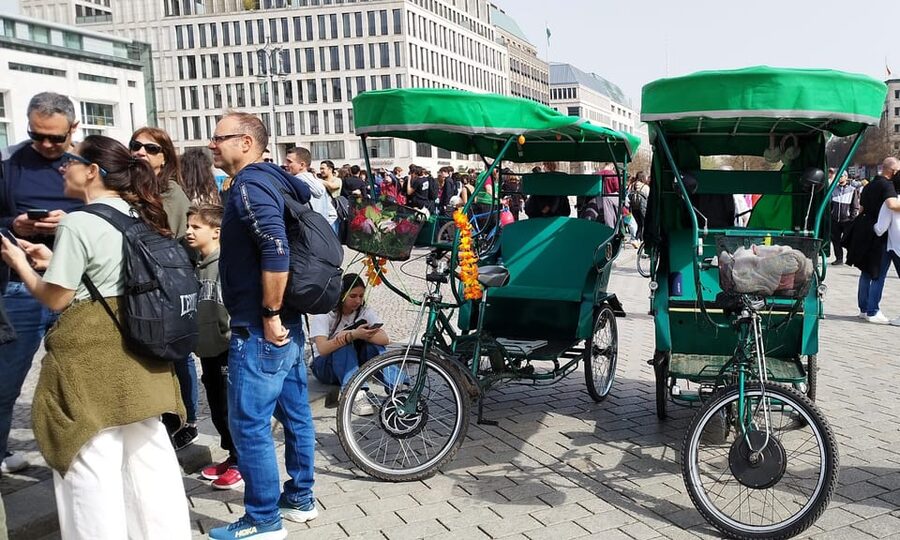
The traditional rickshaws carry up to two people. They are intended for companions who do not ride, including some children under 14, grandparents, or people who prefer not to cycle.
The practical advantage is social. Your family or group can share the same guide and the same route instead of splitting into separate activities. The rickshaw also allows a less-mobile person to get close to monuments with only a few steps to board.
The wording about accessibility should be read carefully. The experience is designed to be easier for people with limited mobility, but the available information does not promise full wheelchair access or a specific transfer system. If you need help boarding, contact the provider before booking and explain your needs clearly.
For young children, the rickshaw may be more relaxed than an e-bike. For older children who can safely ride, the e-bike adds a sense of freedom. The right choice depends on the child’s age, confidence, and comfort with cycling in a city setting.
What $82 gets you
At $82 per person, this is not the cheapest way to see Berlin. You could use public transport and walk between many of these sites for less money. The tour earns its price through time saved, a small group, a guide, bottled water, photo help, and the unusual option of mixing e-bikes with rickshaws.
The value is strongest for a family or group with different abilities. If one person cannot ride, the rickshaw means you do not have to pay for a separate taxi or abandon the day’s sightseeing plan. It also makes the outing more comfortable for anyone who finds a long walking route tiring.
The value is weaker if you want long visits inside museums or memorial centers. This is a moving overview, not a series of full guided admissions. You will see many places from outside and learn how they fit together, then choose where to return.
I would schedule it near the beginning of your stay. One visitor who took it midway through a Berlin visit had already seen several of the places. Taken early, the tour helps you get your bearings and may prevent wasted time crossing the city later.
A fair word about organization and equipment
Most of the available feedback is positive, with a 4.5 rating from 24 reviews. The most consistent praise goes to the guides, especially their history explanations and friendly manner. Several people described the tour as a strong introduction to Berlin’s key areas, and the Dutch-language outing led by Levent was particularly well received.
There are also clear reasons to keep expectations realistic. One outing had an e-bike lose electrical power during the ride, leaving the riders without assistance for about half the route. The same account described an unpleasant response when the problem was raised.
Another person found the bike handover and bike manager chaotic, even while praising Jakob’s guiding. These are not reasons to dismiss the experience, but they are reasons to check the bikes before departure and speak up at once if the motor, brakes, or battery indicator seems wrong.
The provider says safety measures are in place. Still, you should wear comfortable shoes, follow the guide’s instructions, and remember that a three-and-a-half-hour city ride requires a reasonable level of comfort on a bike if you choose the e-bike option.
Who should book this Berlin tour?
I would choose this tour if you want a broad introduction to Berlin’s central history in one outing. It is especially useful for first-time visitors, families with mixed ages, couples traveling with a less-mobile companion, and anyone who finds Berlin’s distances intimidating.
I would also choose it if you prefer explanations while moving through the city rather than spending a full day inside one museum. The route covers enough ground to show how Berlin’s districts and historical periods connect.
I would hesitate if you want a slow, detailed visit at every memorial, or if reliable e-bike equipment is essential to your plans. In that case, ask about battery checks and the rickshaw arrangement before paying.
For most people, the best plan is to use this as your orientation day. Take notes on the places that catch your attention, then return to the Holocaust Memorial, Topography of Terror, Berlin Wall sites, or Museum Island for a longer visit.
FAQ
How long does the Berlin e-bike and rickshaw tour last?
The tour lasts 210 minutes, or three and a half hours.
Where does the tour begin and end?
It begins and ends at Weinbergsweg 6, near U-Bahn Rosenthaler Platz in Berlin.
What language is the tour offered in?
The live guided tour is offered in English. Levent has also led an outing in Dutch.
How many people are in the group?
The group is limited to six participants.
Can someone who does not ride a bike join?
Yes. The experience includes a traditional rickshaw option for non-bikers, less-mobile companions, and children under 14. Each rickshaw can accommodate up to two people.
Which main Berlin sights are included?
The route includes the TV Tower, Museum Island, Unter den Linden, the Nazi book-burning memorial, Checkpoint Charlie, Hitler’s bunker site, the Holocaust Memorial, the Berlin Wall, the Topography of Terror, Brandenburg Gate, and the Reichstag. Potsdamer Platz is also included among the historical highlights.
Is cancellation available?
You can cancel up to 24 hours in advance for a full refund. The tour also offers a reserve-now, pay-later option.
More history tours in Berlin
- Berlin: Natural History Museum Entrance Ticket
★ 4.6 · 3,382 reviews - Berlin: World Heritage Cruise to Potsdam
★ 4.5 · 1,435 reviews - Berlin Historical Highlights Walking Tour
★ 4.9 · 657 reviews - Berlin Private Complete History All Day Walking Tour
★ 5.0 · 474 reviews
Newest Berlin reviews
- Where It All Began: Berlin’s Queer & Trans History Tour★ 4.9 · 6 reviews
- Understanding Kreuzberg: The roots of local (sub)culture★ 4.9 · 11 reviews
- Berlin: guided canoe | kayaktour★ 4.1 · 7 reviews
- Private Potsdam City Tour in an authentic vintage van★ 5.0 · 14 reviews
- Warnemünde Shore Excursion: Private Sachsenhausen and Berlin Tour★ 5.0 · 12 reviews
- Ultimate E-Bike Tour of Berlin with Beer Garden Stop★ 5.0 · 4 reviews
- In the Forbidden City – Potsdam Walking Tour★ 5.0 · 17 reviews
- Private Walking Tour of Potsdam and Sanssouci★ 5.0 · 24 reviews
Berlin Bike Tours, compared.
Sights and Highlights Bike Tour with a Local Guide
Read our review →
Berlin Highlights Sightseeing Bike Tour in Small Groups
Read our review →
Alternative Bike Tour of Kreuzberg & Friedrichshain
Read our review →
Guided Bike Tour of the Berlin Wall and Third Reich
Read our review →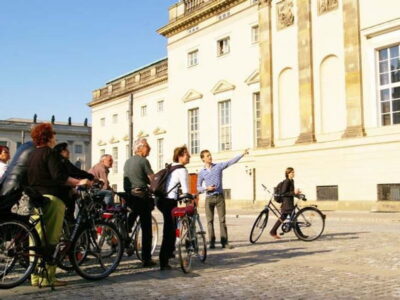
Browse the lists this tour appears in