
Reviewed · BERLIN SIGHTSEEING TOURS
Berlin: 4-Hour Guided Highlights Tour in Spanish
Berlin’s past comes into sharp focus on this Spanish-language walking tour, especially when you move from grand Prussian avenues to the scarred sites of Nazi rule and the Berlin Wall. The route connects Berlin’s oldest quarters with the places that explain its 20th-century wounds.
I like the clear east-to-west path, which helps you understand the city rather than simply collect photographs. I also like the human stories about daily life on both sides of the Wall, including the East Germans who risked their lives to reach West Berlin. The main consideration is simple: four hours on foot can feel long in February snow or summer heat, so wear comfortable clothes and prepare for rain.
Key points at a glance
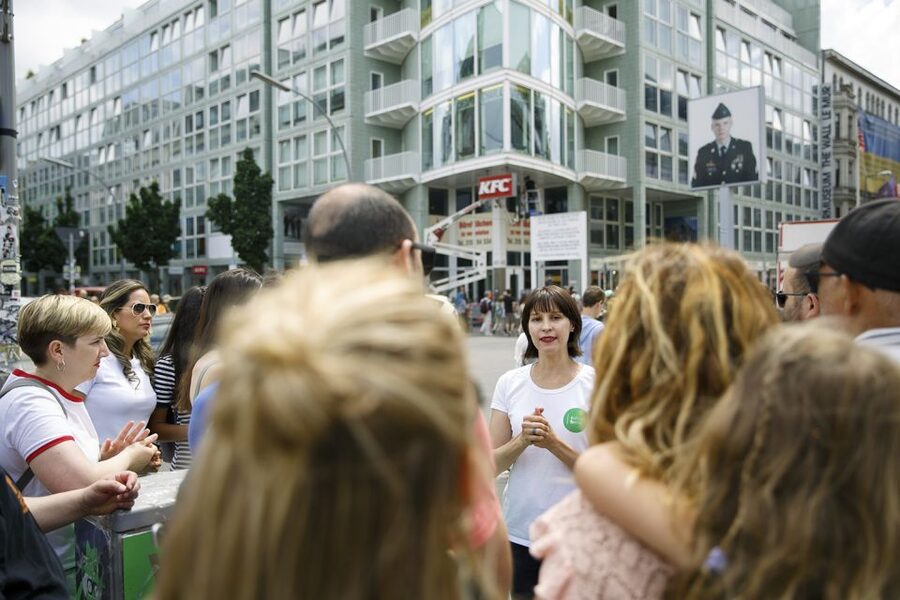
- Start beside the TV Tower: Meet by the green flag marked tours en español, between the Fernsehturm and Alexanderplatz station, near Espresso House.
- Follow Berlin’s story westward: The route runs from medieval origins in San Nicolas through Museum Island, Unter den Linden, Gendarmenmarkt, Potsdamer Platz, and the Brandenburg Gate.
- Get history in Spanish: Guides including Evelyn, Celia, and Constantino have led tours praised for clear explanations, patience, and thoughtful discussion.
- Cover Germany’s hardest chapters: The tour explains Hitler’s rise, the Gestapo site, the Holocaust Memorial, and the construction and fall of the Wall.
- Expect a serious walk: The tour lasts four hours and runs every day, rain or shine, beginning at 10:00.
- Pay $29 for a broad introduction: That is a reasonable price for a live guide covering many central sights, though it is not a substitute for entering Berlin’s museums.
Why this route makes sense for a first day
Berlin can feel scattered at first. Its major sights sit across a wide central area, and the city’s story is split between medieval beginnings, Prussian power, Nazi terror, Cold War division, and reunification.
This route gives you a usable framework. You begin at Alexanderplatz, once a major center of East Berlin, then walk toward the old city, Museum Island, the grand avenue of Unter den Linden, and the former political heart of Prussia. From there, the tour moves through Nazi-era memorials and Cold War sites before finishing at the Brandenburg Gate.
That westward movement matters. You are not just hearing isolated facts. You can connect the changing streets to the changing governments that shaped Berlin.
The tour is only offered in Spanish, so it works best if you are comfortable following a guide for several hours in that language. For Spanish-speaking families or couples traveling together, this can be a more natural and relaxed way to deal with difficult subjects than trying to follow a tour in English or German.
More sightseeing tours in Berlin:
- Berlin: 1-Hour City Tour by Boat with Guaranteed Seating
★ 4.3 · 16,993 reviews - Explore Berlin: See All The Iconic Sights & Some Hidden Gems
★ 5.0 · 4,429 reviews - Berlin: City Sightseeing Hop-On Hop-Off Bus Tour
★ 4.1 · 4,233 reviews
Alexanderplatz and Berlin’s early story
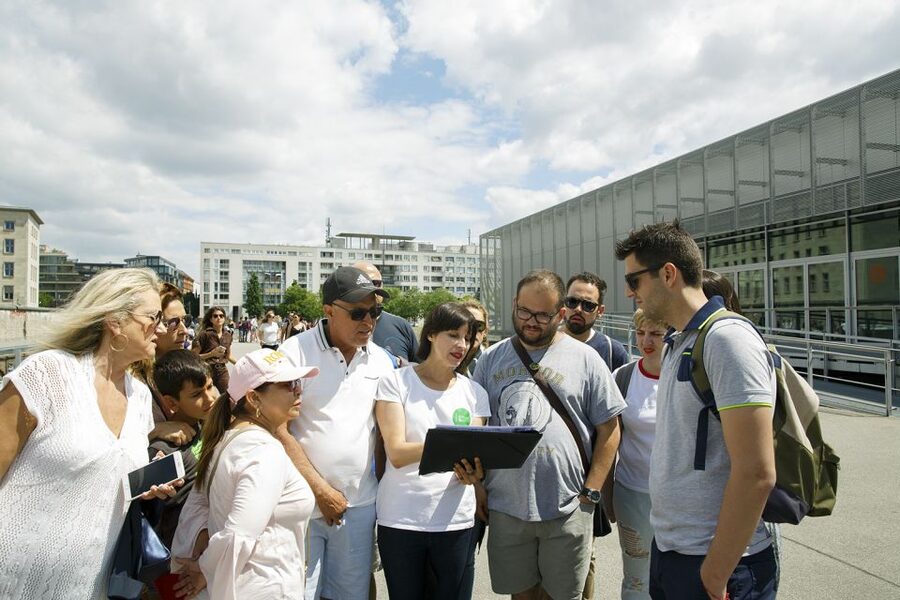
Meet beside the only entrance to the TV Tower at Alexanderplatz. Look for a green flag marked tours en español, positioned between the tower and Alexanderplatz train station, near Espresso House.
This is a useful meeting point because the tower is easy to spot, but Alexanderplatz itself can be busy. Arrive early enough to find the correct side of the Fernsehturm without rushing. The meeting instructions are specific, and the nearby station makes the area easy to reach.
From here, the walk heads toward the San Nicolas neighborhood, where Berlin’s origins are introduced. This opening helps correct a common first impression. Berlin is known for its Cold War scars and modern architecture, but it began as a much older settlement along the Spree.
The early section also gives your guide room to explain how the city grew before it became the capital of Prussia and later the center of modern Germany. Do not expect a long archaeological visit. The value is in getting a basic map of Berlin’s beginnings before the tour moves into the city’s grander political spaces.
Museum Island and the Berliner Dom
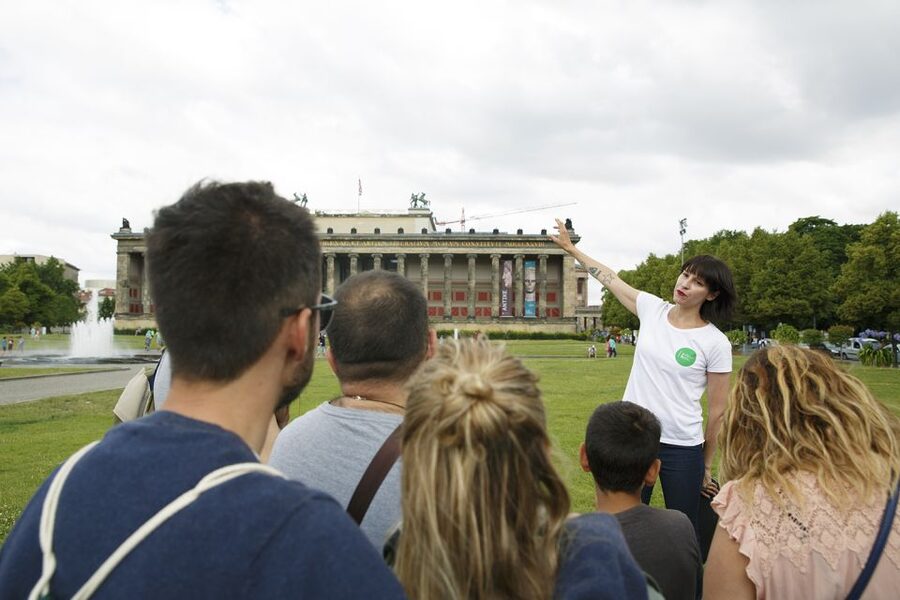
The route continues through Museum Island, a UNESCO World Heritage Site and one of Berlin’s most striking clusters of cultural buildings. You will see the Berliner Dom, the large cathedral with its imposing dome, and walk through an area shaped by royal ambition and public culture.
The tour focuses on outdoor sights, so you should not expect admission to the museums or the cathedral unless that is arranged separately. This is important when judging the price. You receive context and orientation, not a museum visit with time to examine galleries.
Still, the stop is valuable. Museum Island is easier to appreciate when you know how central it was to Berlin’s public and royal life. It also gives you a chance to take photographs and see how the cathedral and surrounding museums define this part of the city.
If you plan to visit one of the museums later, pay close attention to the guide’s explanation of the area. A walking tour can help you decide which indoor visit deserves your limited time.
Unter den Linden and the old royal center
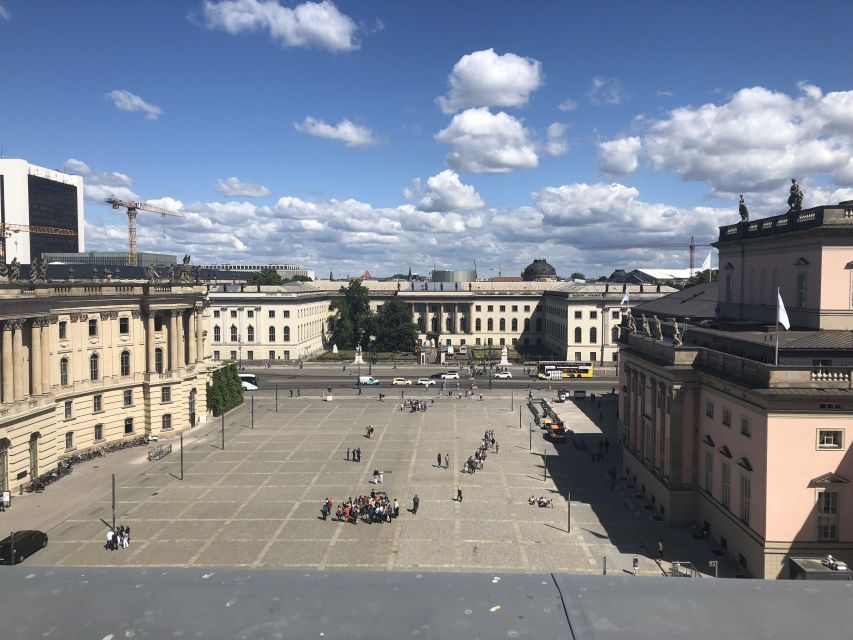
The walk then follows Kaiser’s Avenue and Unter den Linden, Berlin’s famous tree-lined route through the historic center. Along the way, you pass Humboldt University, the Royal Library, and the State Opera.
This is one of the strongest parts of the itinerary for understanding Berlin as a former royal capital. The buildings around Unter den Linden reflect education, monarchy, scholarship, and state power packed into one corridor.
The guide’s role here is more than naming facades. The useful question is how these institutions fit together. A university, library, opera house, and royal avenue tell you how rulers wanted Berlin to present itself, both to residents and to visitors.
The route is also a good reminder that Berlin’s grand architecture does not tell the whole story. Many of the most polished buildings sit close to sites connected with war, dictatorship, and division. The tour keeps shifting between beauty and uncomfortable memory, which is very much the Berlin experience.
Other Berlin experiences to weigh up
- Berlin: Reichstag, Dome and Government District Guided Tour
★ 4.7 · 18,288 reviews - Berlin: Government District around the Reichstag Guided Tour
★ 4.7 · 8,447 reviews - Berlin: Hidden Backyards Guided Walking Tour
★ 4.8 · 5,360 reviews - Berlin: 1-Hour Boat Tour with Bilingual Live Guide
★ 4.7 · 3,629 reviews
Gendarmenmarkt and the planned photo stop
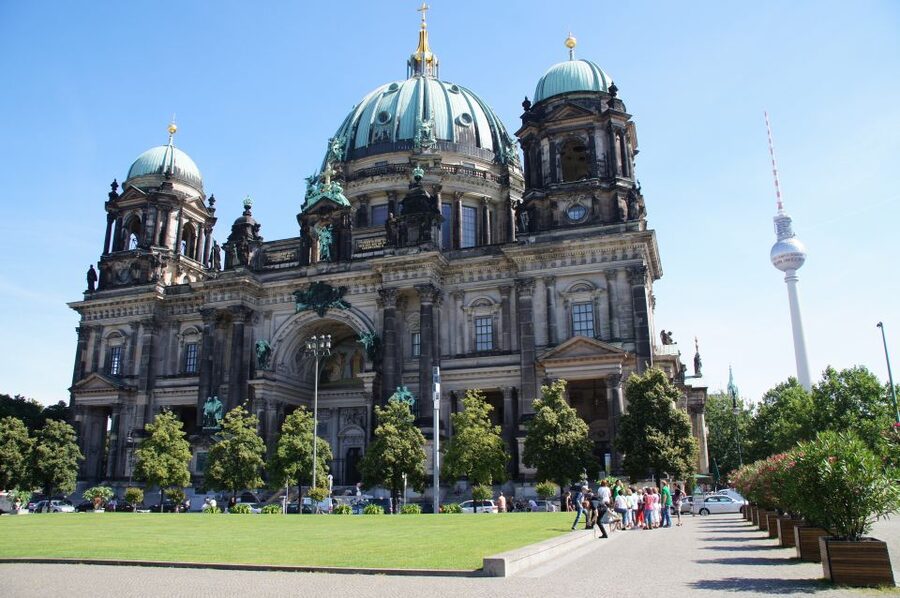
Gendarmenmarkt provides a welcome pause in the middle of the walk. It is widely regarded as one of Berlin’s most beautiful squares, and the itinerary includes time for photographs.
This stop breaks up the heavier historical material. You can take in the square’s balanced design and grand buildings while your guide explains its place in Berlin’s urban story.
The photo stop is practical, but do not mistake it for free time to wander far. The tour has a full route still ahead, and the group needs to keep moving. If you want detailed photographs or an extended look at the square, return later on your own.
A short rest period may also be included. One tour format has provided roughly half an hour for coffee, a bathroom break, and a chance to sit down. Since the walk runs to a fixed four-hour length, treat that break as useful breathing room rather than a guaranteed long café visit.
Hitler’s rise and the Gestapo site
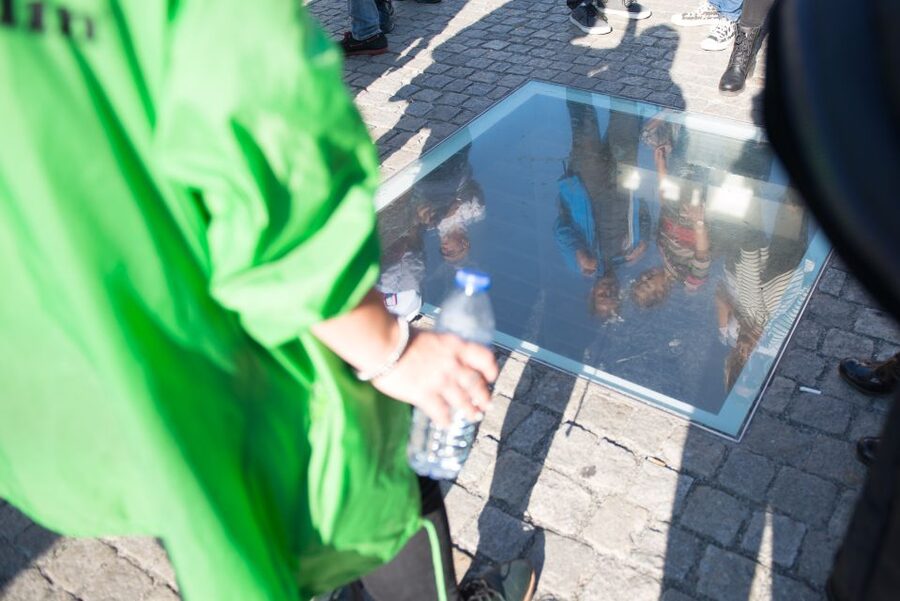
The mood changes sharply as the tour turns to Hitler’s rise to power and the machinery of Nazi rule. You will see the remains of the Gestapo Headquarters, a direct link to the political police and the terror system built under the Nazi regime.
This section is not designed as a museum lecture. The guide explains the sites from the street, placing them in the wider story of how a democracy was dismantled and replaced by dictatorship.
That outdoor format has both strengths and limits. You gain a clear route through the city and can connect different locations, but you will not receive the same depth as you would inside a dedicated museum. If Nazi-era history is your main reason for visiting Berlin, plan another visit to an indoor historical museum after this tour.
The subject matter is serious. A good guide needs to be clear without turning tragedy into spectacle. Celia, one of the named guides, has been praised for encouraging discussion and reflection while keeping the history approachable. That kind of tone suits this part of Berlin especially well.
The Memorial to the Murdered Jews of Europe
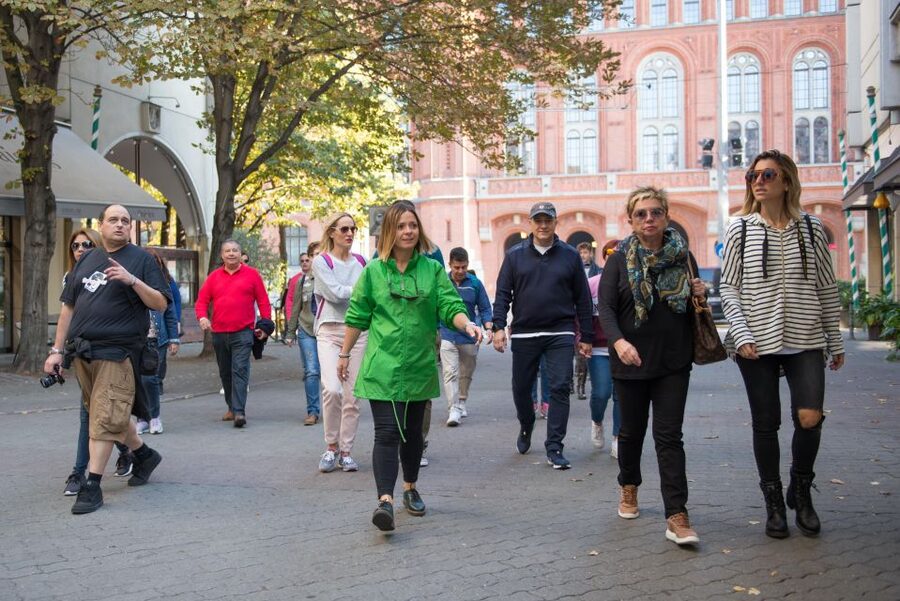
The tour pauses at the Memorial to the Murdered Jews of Europe, the field of concrete blocks near the Brandenburg Gate. Here the emphasis shifts from political events to the Holocaust and the memory of the Jews murdered under Nazi rule.
Your guide can provide the historical setting, but the memorial also requires personal attention. Walk among the blocks, notice how the ground changes, and give yourself a moment without rushing to the next photograph.
Because this is a public memorial rather than a conventional monument with a simple inscription, its effect can be difficult to explain in a few minutes. The guide’s context helps, but you may want to return later if you prefer a quieter visit.
The memorial is one reason this tour is more than a sightseeing loop. You are not only looking at famous buildings. You are being asked to understand how Berlin remembers the people harmed by the city’s government and institutions.
The Wall, divided Berlin, and everyday life
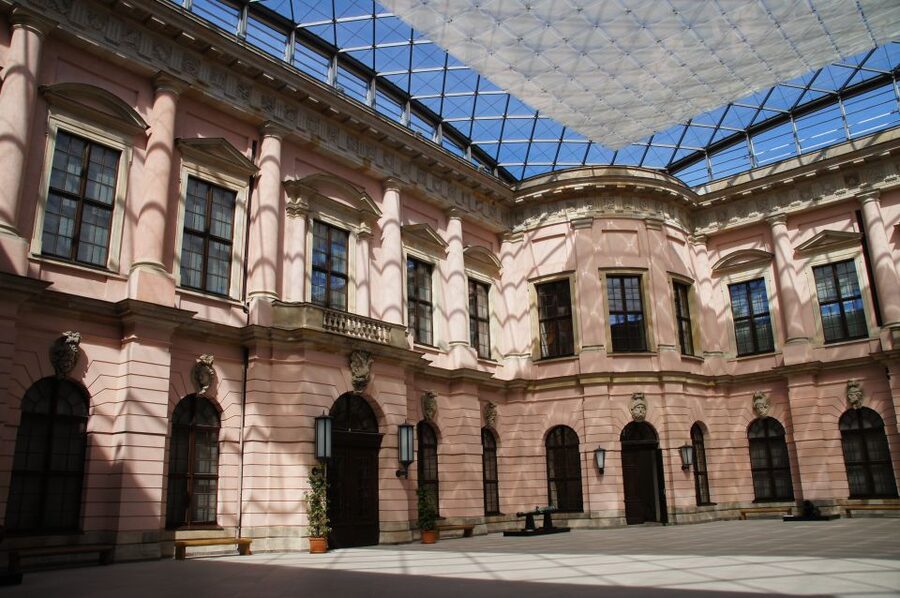
The Cold War section explains why the Berlin Wall was built, how it divided the city, and why it eventually fell. This is likely the most distinctive part of the tour for many people.
Berlin’s division was not just a line on a map. Families, workplaces, streets, and daily routines were split between East and West. Your guide explains how residents on both sides lived with the barrier and tells stories of East Germans who risked their lives to cross into West Berlin.
This personal scale makes the history easier to grasp. Political leaders and treaties matter, but so do restricted movement, surveillance, separation, and the constant presence of a concrete barrier through the city.
The tour also covers what happened before and after the Wall fell. That wider timeline helps you understand why the Wall was constructed rather than treating it as a random Cold War monument.
The route does not promise a long stop at a preserved Wall memorial site, so you should not book this expecting the depth of a dedicated Wall tour. Its strength is the overall story, presented while you move through central Berlin.
Potsdamer Platz and the Brandenburg Gate
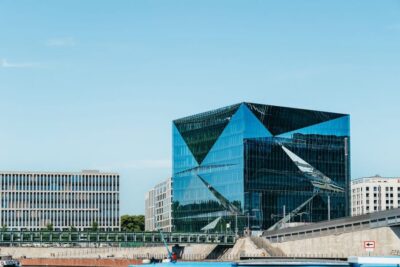
The final stretch reaches Potsdamer Platz, where modern Berlin replaces much of the older city fabric. The area is known for dramatic contemporary architecture and represents the city’s post-reunification rebuilding.
This is a useful contrast after the Wall discussion. Potsdamer Platz shows how quickly a divided, damaged area could be reshaped into a modern center. It also reminds you that Berlin is still changing, rather than being a city frozen in its past.
The tour ends at the Brandenburg Gate, Berlin’s most recognizable symbol. The gate has served different governments and political causes, and its meaning changed again after German reunification.
Finishing here gives the route a strong visual endpoint. You have moved from Alexanderplatz and the former East to a landmark tied to the city’s reunification and national identity. It is also a convenient place to continue sightseeing after the tour.
What $29 gets you
At $29 per person, this is good value if you want a broad introduction to central Berlin with a Spanish-speaking guide. The route covers a large number of important places, and the guide adds the connections that you would miss by walking between them alone.
The price does not include museum admission, food, drinks, or a dedicated indoor visit. Think of it as a guided orientation rather than a complete Berlin history course.
The value improves if you take the tour near the beginning of your stay. You can use the route to decide which places deserve a second visit, then return to Museum Island, the Holocaust Memorial, the Wall-related sites, or other museums with more time.
A private group is available, and hotel-lobby pickup can be requested. Those options may suit families or groups that want a more personal pace, but the standard experience is the better bargain for most people focused on cost.
Pace, weather, and accessibility
This is a four-hour walking tour, and it runs every day at 10:00, rain or shine. Comfortable clothing is specifically advised, and that advice should be taken seriously.
Berlin weather can change quickly. In cold conditions, bring warm layers and shoes that can handle wet streets. In warmer weather, carry water and protect yourself from the sun. Snow did not prevent one February group from completing the walk, but winter conditions can make four hours feel much longer.
The tour is listed as wheelchair accessible. Still, because the route covers several neighborhoods and includes extended outdoor walking, confirm any personal mobility needs when booking.
The tour is suitable for slower walkers when the guide manages the pace well. Evelyn, one of the guides, has been noted for patience with people who walk more slowly. That is especially useful for families with older relatives.
Who should book this Spanish tour?
I would choose this tour for a first visit to Berlin, especially if you want the main sights explained in Spanish and prefer history tied to actual streets and buildings.
It also suits families. A guide can turn a sprawling city into a story that younger or less experienced visitors can follow, though the Nazi and Holocaust sections require a level of maturity.
The tour is a strong match for anyone who wants Berlin’s 20th-century history to receive serious attention. Guides such as Evelyn and Celia have been recognized for clear delivery, patience, and discussion that goes beyond memorized dates.
I would look elsewhere if you want extensive museum time, a short walking route, or a tour conducted in English. This is a broad, serious, four-hour introduction, not a relaxed café crawl or a specialist architecture walk.
Should you book it?
Book this tour if you want to understand how Berlin’s key sights fit together and Spanish is your preferred tour language. The route covers the city’s origins, royal center, Nazi-era crimes, Holocaust memory, Cold War division, reunification, and modern rebuilding in one morning.
The best reason to choose it is the human focus on life behind the Wall. The best practical reason is the low price for four hours with a live guide.
Skip it only if a long outdoor walk sounds tiring or if you already know central Berlin well. For most first-time visitors who want a serious overview without spending much, this is a sensible starting point.
FAQ
Where does the tour meet?
Meet beside the only entrance to the TV Tower, or Fernsehturm, at Alexanderplatz. Look for a green flag marked tours en español between the tower and Alexanderplatz train station, near Espresso House.
What time does the tour begin?
The tour begins at 10:00 every day.
How long does the tour last?
The walking tour lasts four hours.
Is the tour offered in English?
No. This activity is offered only in Spanish.
Is the tour wheelchair accessible?
Yes, the activity is listed as wheelchair accessible.
What sights are included?
The route includes Alexanderplatz, the San Nicolas neighborhood, Museum Island, the Berliner Dom, Unter den Linden, Humboldt University, the Royal Library, the State Opera, Gendarmenmarkt, the former Gestapo Headquarters, the Memorial to the Murdered Jews of Europe, Potsdamer Platz, and the Brandenburg Gate.
Does the tour include museum admission?
Museum admission is not listed as included. The included service is a guided tour in Spanish.
Can I book a private group?
Yes, a private group option is available.
Is hotel pickup available?
Yes, pickup at your hotel lobby can be requested as an optional service.
What should I bring?
Wear comfortable clothes for four hours of walking. The tour runs rain or shine, so prepare for the weather.
Newest Berlin reviews
- Where It All Began: Berlin’s Queer & Trans History Tour★ 4.9 · 6 reviews
- Understanding Kreuzberg: The roots of local (sub)culture★ 4.9 · 11 reviews
- Berlin: guided canoe | kayaktour★ 4.1 · 7 reviews
- Private Potsdam City Tour in an authentic vintage van★ 5.0 · 14 reviews
- Warnemünde Shore Excursion: Private Sachsenhausen and Berlin Tour★ 5.0 · 12 reviews
- Ultimate E-Bike Tour of Berlin with Beer Garden Stop★ 5.0 · 4 reviews
- In the Forbidden City – Potsdam Walking Tour★ 5.0 · 17 reviews
- Private Walking Tour of Potsdam and Sanssouci★ 5.0 · 24 reviews
Berlin Sightseeing Tours, compared.
1-Hour City Tour by Boat with Guaranteed Seating
Read our review →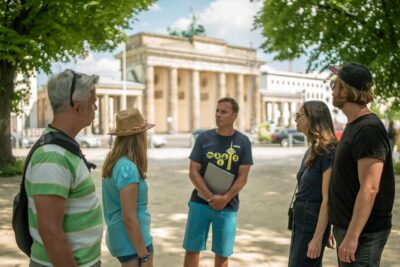
Explore Berlin: See All The Iconic Sights & Some Hidden Gems
Read our review →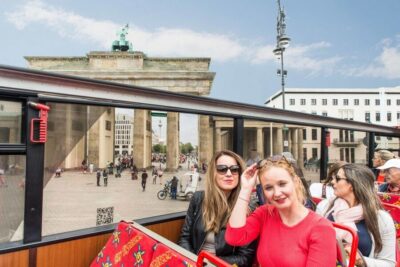
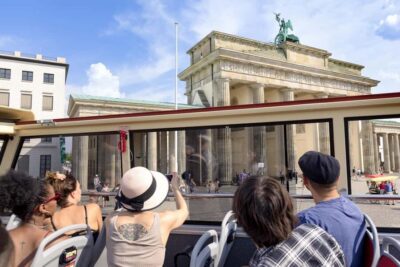
Hop-On Hop-Off Sightseeing Bus with Boat Options
Read our review →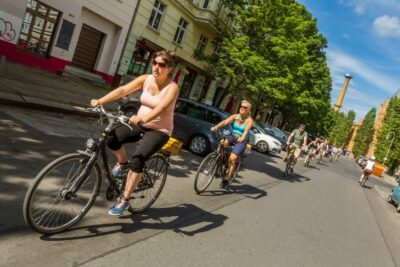
Sights and Highlights Bike Tour with a Local Guide
Read our review →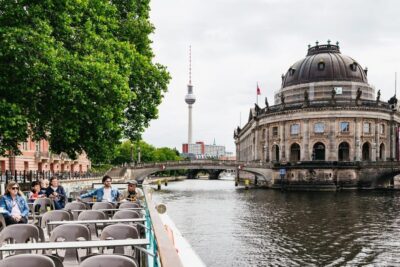
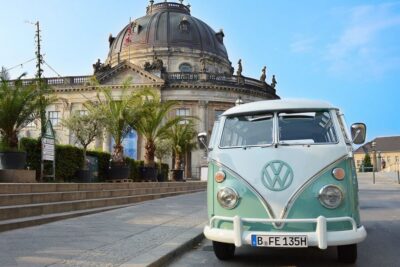
Sightseeing Tour in Classic Volkswagen T1 Samba Bus
Read our review →
Browse the lists this tour appears in