
Reviewed · REICHSTAG TOURS
Guided Insider Tour Government and Parliament District
Berlin’s government district looks polished and purposeful, but its clean lines hide plenty of arguments, odd decisions, and construction drama. This small-group walk gives you that behind-the-scenes story from a guide who worked for the company that built the new Chancellery and parliamentary buildings.
I like the rare insider access to the decision-making process, especially the mix of politics, architecture, and public art. I also like the six-person limit, which should make it easier to ask questions and keep the tour focused. The main drawback is clear: you will not enter the buildings, and 90 minutes may feel short if you want a detailed look at every landmark.
Key points to know
- A former construction insider leads the walk: The guide once ran the offices of the CEO and CFO of the Federal Construction Company Berlin.
- The tour covers major federal buildings: You see the Chancellery, Paul-Löbe-House, Reichstag, and the route toward Brandenburg Gate.
- Architecture, politics, and art all matter here: The stories go beyond dates and façades to explain competitions, construction choices, and public art.
- The group is limited to six people: This is a better setup for questions than a large city tour.
- No interiors are included: The walk is about exterior architecture and the stories behind the buildings.
- The Reichstag roof terrace is a separate option: It is free, but you must reserve a time slot in advance.
Why Berlin’s government quarter rewards a closer look
Many visitors cross the Spree, take a quick photo of the Reichstag, and continue toward the Brandenburg Gate. That is understandable. The buildings are modern, open, and somewhat restrained, not the sort of places that demand attention from every angle.
A guide with direct involvement in the construction gives you a reason to slow down. The Federal Construction Company Berlin helped create the new Chancellery, the office and committee buildings of the German Parliament, and the renewed Reichstag. The project represented an investment of 1.8 billion euros over seven years.
That background matters because this is not simply a tour of handsome buildings. You hear how Berlin’s federal center was planned after reunification, how architectural competitions shaped the results, and how construction decisions carried political meaning.
The guide also worked on art projects in the buildings. That adds a useful layer to the walk. Public art in government spaces is rarely random, and the tour promises to explain the choices behind it.
More Reichstag and government quarter tours in Berlin:
- Berlin: Reichstag, Dome and Government District Guided Tour
★ 4.7 · 18,288 reviews - Berlin: Government District around the Reichstag Guided Tour
★ 4.7 · 8,447 reviews - Berlin: Reichstag, Plenary Chamber, Cupola & Government Tour
★ 4.6 · 8,422 reviews
Meeting on the Gustav-Heinemann-Brücke
The tour begins on the Gustav-Heinemann-Brücke, a practical starting point in the Spreebogen area. Look for the guide wearing a white bike helmet. That is a more useful marker than a formal sign, especially in a busy central Berlin setting.
You should arrive ready to walk and stand outdoors. Comfortable shoes and comfortable clothing are sensible choices. The activity lasts about 90 minutes, so it is not a strenuous half-day outing, but the route is still best enjoyed when you are not distracted by sore feet or poor weather clothing.
The small group limit of six is one of the strongest parts of the format. Government architecture can produce questions about security, symbolism, building materials, political compromise, and public spending. In a large group, those questions often get lost. Here, you should have a better chance to ask about the details that catch your eye.
The guide speaks English, German, and French. The tour is also listed as wheelchair accessible, though you may want to confirm route conditions when booking if you have particular mobility needs.
The Federal Chancellery and the business of building power
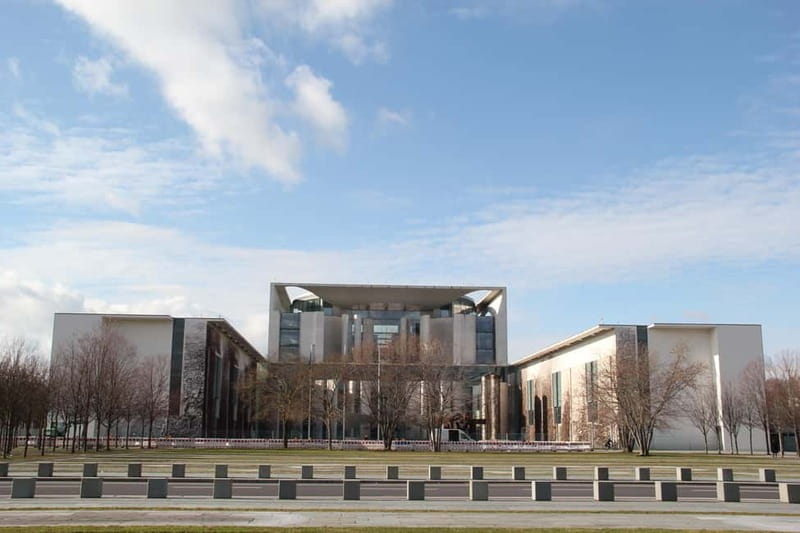
The Federal Chancellery is the first major landmark on the route. It is the working center of Germany’s federal government, and its scale makes it one of the most recognizable modern buildings in Berlin.
The useful part of this stop is not just the building’s size or appearance. The guide can place it in the larger story of federal construction, including the planning choices and architectural competition that shaped the government district.
The person leading the tour was not a distant observer. During his time with the Federal Construction Company Berlin, he ran the offices of the chief executive and chief financial officer. Strategic decisions passed across his desk, giving him a view of the project from the administrative side as well as the architectural side.
That should make the Chancellery stop especially valuable for anyone interested in how major public projects actually happen. You are not only looking at the finished building. You are hearing about the negotiations, costs, planning, and construction process behind it.
Still, keep your expectations in check. The Chancellery is viewed from outside. You should not expect a security briefing, a visit to government offices, or a chance to enter the building.
Paul-Löbe-House and the working Parliament
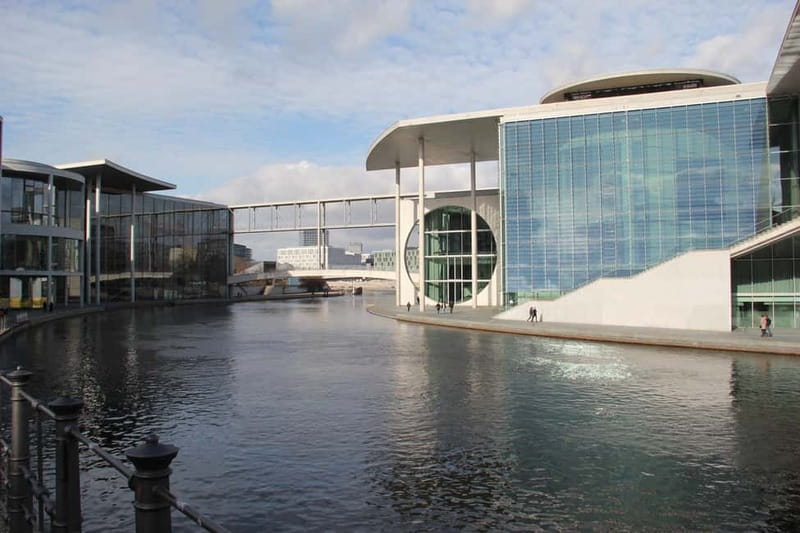
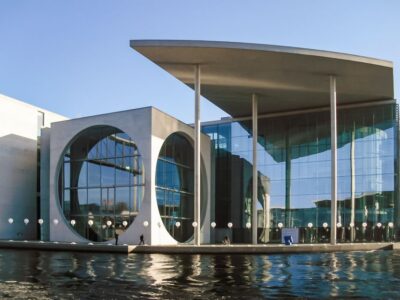
The next important stop is Paul-Löbe-House, one of the buildings used by the German Parliament. Its role is different from the more symbolic Reichstag. It is tied to the everyday work of lawmakers, committees, and parliamentary administration.
That distinction gives the tour some depth. Government districts are often photographed as collections of monuments, but they are also workplaces. The office and committee buildings show how a parliament functions beyond the famous debating chamber.
The guide’s background is especially relevant here. The Federal Construction Company Berlin was involved in creating the new office and committee buildings, so the explanation should connect the building’s form with its practical use. You may hear about the architectural competition, the construction process, and the political dimensions of placing these buildings in the new capital.
The strongest part of this stop is likely the connection between architecture and democracy. A parliamentary building has to handle security, public access, daily work, symbolism, and national identity at the same time. The walk helps you read those demands in the building rather than treating it as a plain office block.
Again, there is no interior visit. That is important if you are looking for a tour of parliamentary rooms. This experience is better suited to you if the stories behind the architecture matter as much as the rooms themselves.
Other Berlin experiences to weigh up
- Berlin: Hidden Backyards Guided Walking Tour
★ 4.8 · 5,360 reviews - Berlin: 1-Hour Boat Tour with Bilingual Live Guide
★ 4.7 · 3,629 reviews - Berlin: Sights and Highlights Bike Tour with a Local Guide
★ 4.8 · 2,698 reviews - Berlin: Solar Powered Sunset Catamaran Cruise & Audio Guide
★ 4.6 · 1,043 reviews
The Reichstag, from renewed symbol to public landmark
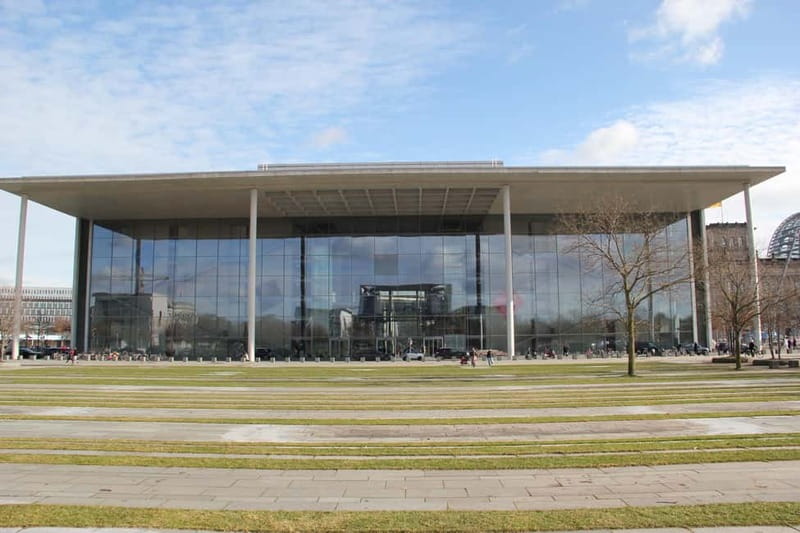
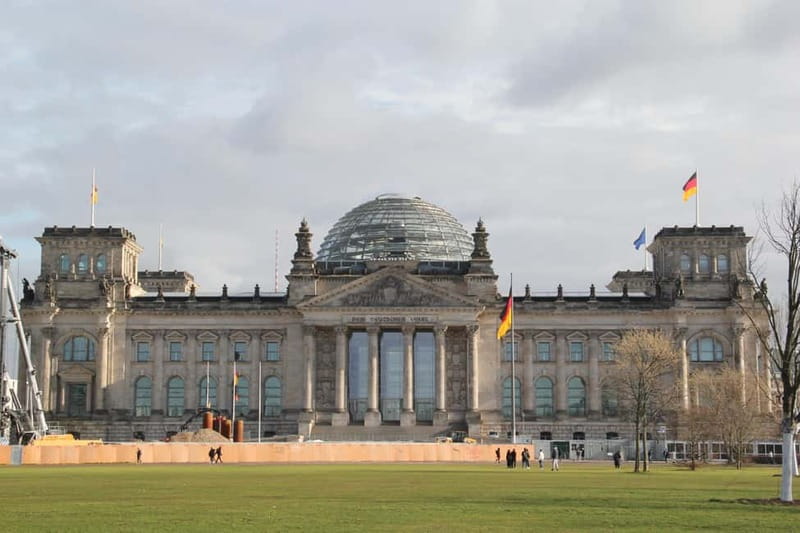
The Reichstag is the best-known stop and probably the point where many visitors will pay closest attention. The building combines Germany’s political past with its current parliamentary role, and its renewed design made it one of Berlin’s most recognizable sights.
The walk focuses on the building from outside. You can expect information about its renewal, its architectural meaning, and the decisions that shaped the modern parliament complex. The guide’s involvement with the federal construction program gives this part a useful connection to the rest of the route.
Do not confuse this tour with a visit to the Reichstag roof terrace and dome. The roof terrace is open to visitors, but it is a separate experience. Entry is free, and an audio guide is available. You must reserve a time slot online or at the counter in front of the west façade several days ahead.
That separate visit can pair well with this walk. The guided tour gives you context and construction stories, while the Reichstag’s own visitor access gives you the chance to see part of the building from inside. You do not need to pay for this tour to visit the roof terrace, so factor that into the value calculation.
If your main goal is to enter the Reichstag, book the free official visit separately. If your main goal is to understand why the building looks and functions as it does, this guided walk adds something the audio guide may not cover.
Public art and the details most visitors miss
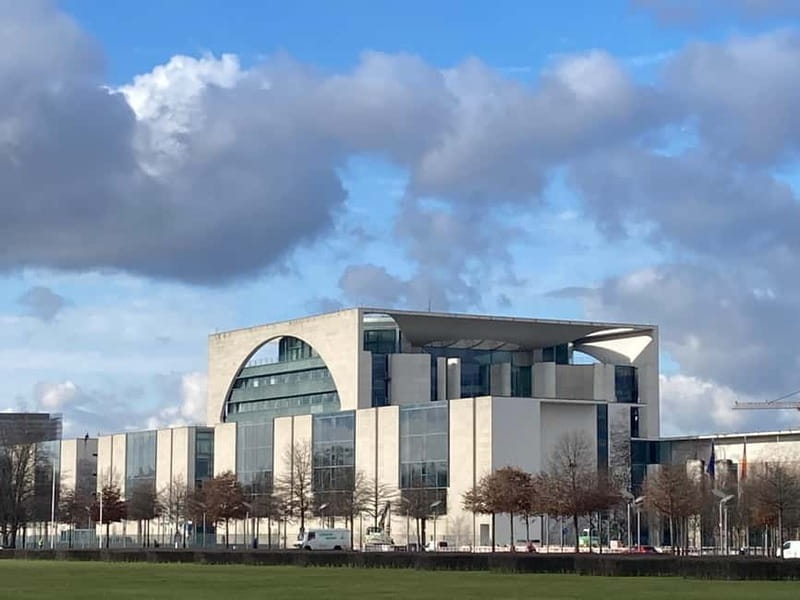
The guide was responsible for all art projects in the buildings covered by the construction program. That makes public art one of the more distinctive features of this experience.
Most city tours mention a sculpture or mural only in passing. Here, art is part of the guide’s professional story. You can expect explanations of how art was selected, how it fits into a public building, and how artistic choices relate to politics and architecture.
This is also where the tour may feel most different from a standard Berlin history walk. The focus is not only on famous events. You are encouraged to think about who commissioned the art, what message it carries, and how art works in places where elected officials and the public meet.
The available information does not identify every artwork or promise a complete art tour, so you should not book this expecting a catalogue of every piece in the district. Still, anyone interested in modern architecture, public commissions, or the visual language of government should find this angle worthwhile.
Finishing toward Brandenburg Gate
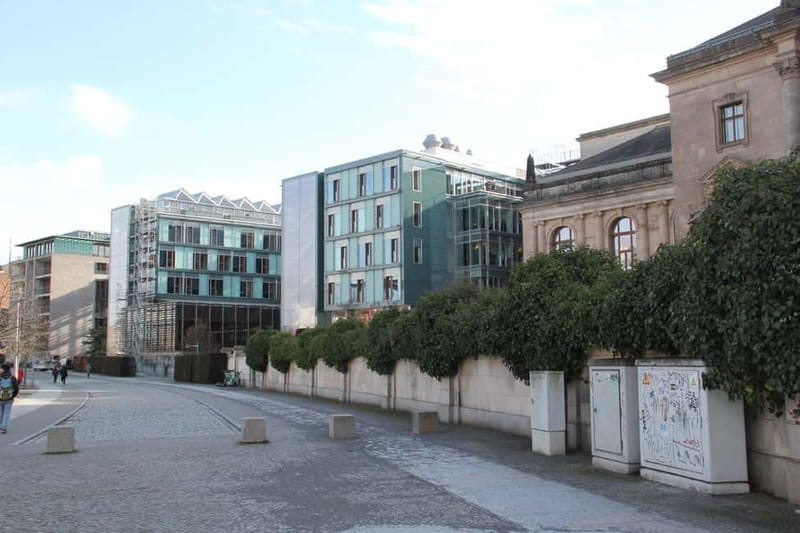
The route continues toward Brandenburg Gate, giving the tour a clear connection between the federal district and one of Berlin’s most famous historic landmarks. The contrast is useful. The government quarter represents the modern federal capital, while the gate carries older layers of Prussian, imperial, divided, and reunited Berlin.
The stated itinerary finishes at Brandenburg Gate. However, the meeting-point information also says the activity ends back at the meeting point. Because those details do not match, check the final meeting and end location when you reserve. This is a small practical issue, but it matters if you have a timed museum visit, restaurant booking, or train connection afterward.
Either way, the route is compact enough to fit into a day of central Berlin sightseeing. You can combine it with the Reichstag roof terrace, Brandenburg Gate, the Memorial to the Murdered Jews of Europe, or other nearby sights, but allow extra time if you plan to visit an interior site after the walk.
What the 44 dollar price buys you
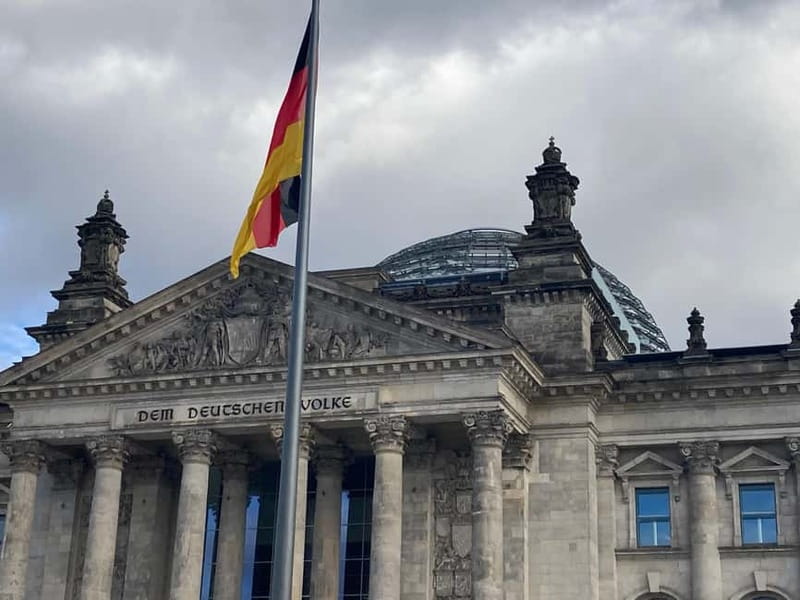
At $44 per person, this is not a bargain-priced orientation walk. The value comes from the guide’s unusual professional background and the group size, not from the number of sights checked off in 90 minutes.
You are paying for a specialized explanation of buildings that are often difficult to understand on your own. The guide worked for the public-owned Federal Construction Company Berlin during the seven-year building program and had a role close to the project’s top management. That is a stronger connection than you usually get on a general city tour.
The price is easier to justify if you care about architecture, public art, German politics, or the practical side of large public construction. It is less compelling if you want interior access, panoramic views, or a broad history of Berlin.
The free Reichstag roof terrace is an important comparison. It gives you access to part of the building and an audio guide without a ticket charge, but it does not replace this walk’s focus on construction stories, architectural competitions, art projects, and political meaning.
With no more than six people, the cost also buys a more personal setting. You can ask specific questions, and the guide can spend time on the subjects that interest you most. For a couple or small family with a strong interest in modern Berlin, that may be worth more than a cheaper large-group tour.
Who should book this government district walk?
I would recommend it most strongly to:
- You enjoy architecture and want more than a photo stop.
- You are interested in how German federal institutions work.
- You like public art and want to hear how art projects enter government buildings.
- You prefer small groups and direct questions.
- You have already seen Berlin’s major historic sights and want a modern political angle.
- You want a short activity that fits neatly into a central Berlin itinerary.
I would hesitate if your priority is entering the Chancellery, Parliament, or the Reichstag. None of those interiors is part of this activity.
It may also feel too specialized if you want a general introduction to Berlin. The guide covers politics, architecture, art, and construction, but the route is centered tightly on the federal district.
The tour is wheelchair accessible, and it is offered in English, German, and French. Alcohol and drugs are not allowed, and the activity is not considered suitable for people over 95. Free cancellation is available up to 24 hours before the start, and you can reserve while paying later, which helps if your Berlin schedule is still shifting.
My verdict on the insider tour
Book this tour if you want the story behind Berlin’s modern government buildings rather than a quick parade of famous façades. The guide’s direct connection to the construction program, combined with the six-person limit, gives the walk a level of detail you are unlikely to get from a standard sightseeing route.
Skip it if interior access is essential or if you mainly want a view from the Reichstag dome. The free official roof terrace visit will serve that purpose better.
For the right audience, $44 is a fair price for a focused 90-minute conversation about architecture, politics, public art, and the making of the federal capital. Just confirm the final stopping point and reserve the Reichstag roof visit separately if you want to go inside.
FAQ
How long does the guided government district tour last?
The tour lasts 1.5 hours.
Where does the tour begin?
The meeting point is the Gustav-Heinemann-Brücke. The guide wears a white bike helmet.
Where does the tour finish?
The stated route finishes at Brandenburg Gate. The meeting-point information also says the activity ends back at the meeting point, so confirm the final location when booking.
Which buildings are included?
The route covers the German Chancellery, Paul-Löbe-House, and the Reichstag, with the route finishing toward Brandenburg Gate.
Can I enter the Chancellery or the Parliament buildings?
No. The tour does not include access inside the buildings.
Is the Reichstag roof terrace included?
No. The roof terrace is a separate visit. It is free and includes an audio guide, but you must reserve a time slot several days in advance online or at the counter in front of the west façade.
What languages are available?
The live tour is available in English, German, and French.
How many people can join the tour?
The group is limited to six participants.
Newest Berlin reviews
- Where It All Began: Berlin’s Queer & Trans History Tour★ 4.9 · 6 reviews
- Understanding Kreuzberg: The roots of local (sub)culture★ 4.9 · 11 reviews
- Berlin: guided canoe | kayaktour★ 4.1 · 7 reviews
- Private Potsdam City Tour in an authentic vintage van★ 5.0 · 14 reviews
- Warnemünde Shore Excursion: Private Sachsenhausen and Berlin Tour★ 5.0 · 12 reviews
- Ultimate E-Bike Tour of Berlin with Beer Garden Stop★ 5.0 · 4 reviews
- In the Forbidden City – Potsdam Walking Tour★ 5.0 · 17 reviews
- Private Walking Tour of Potsdam and Sanssouci★ 5.0 · 24 reviews
Reichstag Tours, compared.
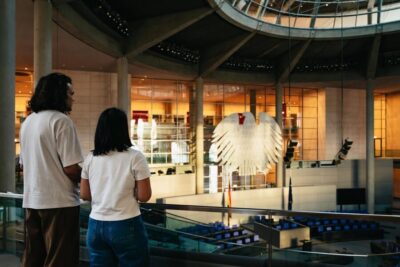
Reichstag, Dome and Government District Guided Tour
Read our review →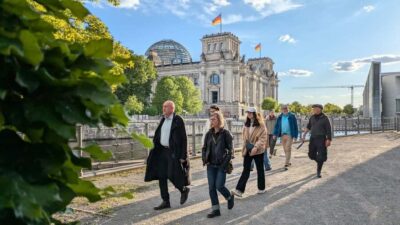
Reichstag, Plenary Chamber, Cupola & Government Tour
Read our review →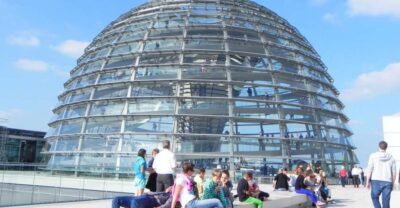
Government District Tour and Reichstag Dome Visit
Read our review →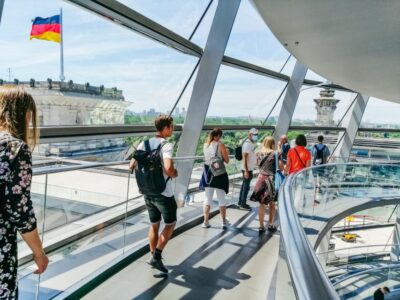
Government Quarter Tour and Reichstag Dome Visit
Read our review →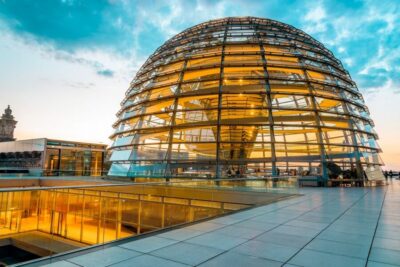

Rooftop Breakfast at Käfer Restaurant Reichstag
Read our review →
Rooftop Aperitif at Reichstag Käfer Restaurant
Read our review →Browse the lists this tour appears in