
Reviewed · POTSDAM AND SANSSOUCI DAY TRIPS
Potsdam Tour from Berlin With Guided Sanssouci Palace Visit
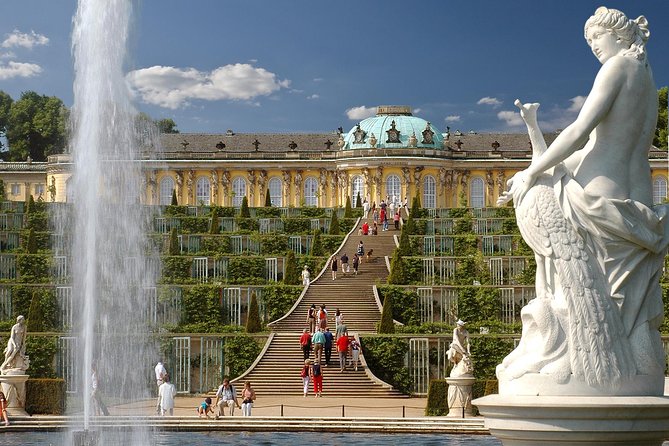
Potsdam is where Prussian royal life, Cold War drama, and elegant European town planning come together in one easy half-day outing. The centerpiece is Sanssouci Palace, Frederick the Great’s relaxed summer retreat, but the route also brings you past the Bridge of Spies, the Dutch Quarter, Russian Alexandrovka, and Potsdam’s grand Old Market.
I like the comfortable coach ride and the amount of history packed into four hours. Guides such as Susan, Jasmin, Karin, and Stefanie have been praised for clear English, lively explanations, and useful commentary on the road from Berlin. I also like the included palace admission and skip-the-line access, which saves time at a busy sight.
The tradeoff is simple: four hours is tight for a city with this much to see. You get a well-organized introduction rather than a slow, independent exploration, and the bilingual format may mean less English commentary on some departures. Food, drinks, and palace refreshments are not included.
Key points to know before you book
- Sanssouci gets the main share of the visit: Plan on about two hours connected with the palace and its grounds.
- The Bridge of Spies adds real Cold War meaning: Glienicke Bridge is more than a quick photo stop.
- A coach makes the half-day practical: You cover widely spaced Potsdam sights without arranging regional transport yourself.
- The guide shapes the experience: Susan, Jasmin, Karin, Jasmin, Bridget, and Stefanie are among the guides praised for strong historical commentary.
- The price buys convenience, not a full Potsdam day: At $77.23 per person, the value rests on transport, guiding, and included palace entry.
- Bring a little cash for restrooms: One stop is reported to charge 50 cents, and the coach restroom may not be available.
Why Potsdam makes a smart half-day from Berlin
Potsdam sits close to Berlin, but it feels like a different chapter of German history. It was the royal seat of Prussia, a city shaped by Frederick the Great and later rulers, and a place touched by the Cold War border between West Berlin and East Germany.
That mix is the reason I rate this outing above a simple palace transfer. You are not only driven to Sanssouci, shown a few rooms, and returned to Berlin. Along the way, the guide can connect royal power, Russian influence, classical architecture, wartime destruction, and postwar division.
The coach leaves at 10 a.m. from Kurfürstendamm 216 and returns to the same point. That fixed arrangement is useful if you want to keep your Berlin afternoon open. It also removes the work of comparing train routes, local buses, palace entry times, and the distance between Potsdam’s sights.
The group can reach 30 people, so this is not a private tour. Still, that is a manageable size for a coach trip, and the included guide provides more context than you would get from simply taking public transport and walking around on your own.
More Potsdam and Sanssouci day trips from Berlin:
- Potsdam: City and Castles Tour
★ 4.7 · 3,721 reviews - Potsdam: Palace Tour by Boat
★ 4.5 · 2,369 reviews - Potsdam: Sanssouci Palace and Prussian Palaces Entry Ticket
★ 4.5 · 2,101 reviews
The ride from Berlin and the first history lesson
The drive is part of the tour, not just dead time between stops. Guides have been praised for explaining Berlin and Potsdam while the coach is moving, with some also pointing out places connected to the city’s modern development.
One particularly interesting detail from the route is the AVUS grandstand, linked to Berlin’s historic automobile road. Seeing it on the return journey can give the ride a little extra character, especially if you enjoy transport, engineering, or twentieth-century Berlin.
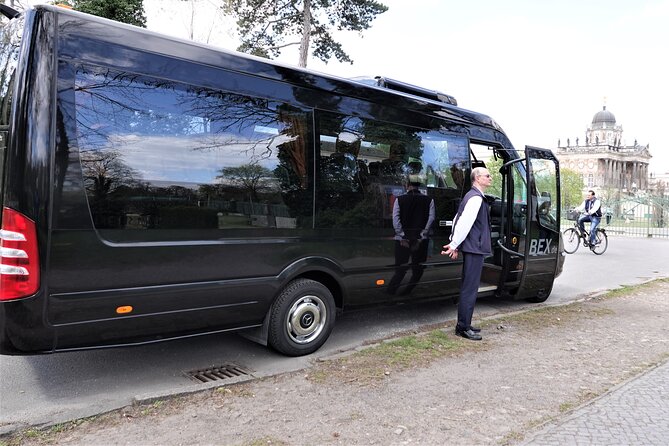
The coach itself is described as clean and comfortable, with drivers praised for punctual departures and smooth, safety-minded driving. That matters here because the tour covers several locations in a short period. A late departure or awkward transfer would quickly eat into your palace time.
The main practical weakness is the lack of included food and drinks. The coach restroom may be locked or unavailable, and a restroom at one stop costs 50 cents. I would use the facilities when the guide recommends it and carry small change.
Sanssouci Palace: Frederick the Great’s private retreat
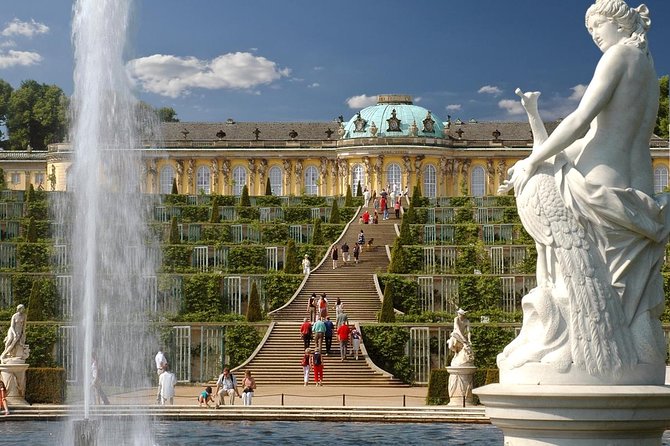
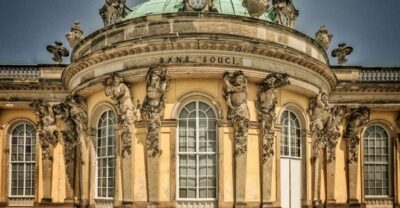
Sanssouci is the heart of the outing, and the palace visit takes roughly two hours. Built between 1745 and 1747, it was designed by Georg Wenzeslaus von Knobelsdorff for Frederick the Great, King of Prussia.
The name means without worries, which tells you a great deal about the building’s purpose. This was not meant to be a formal seat for grand state ceremonies. Frederick wanted a private summer residence away from the strict routine of the Berlin court.
That private purpose helps you understand the palace. Sanssouci is elegant and historically important, but it is not the vast, theatrical royal complex some people expect from Europe’s biggest palaces. One useful way to set your expectations is to think of it as Frederick’s personal retreat, not a giant ceremonial machine.
The palace is part of a larger park filled with gardens, terraces, temples, and decorative follies. Those features make the grounds just as important as the rooms. You will have a chance to appreciate the setting, though the half-day schedule does not allow an unhurried walk through every corner.
Skip-the-line entry is included, which is one of the strongest practical benefits of booking this tour. Palace access can otherwise take valuable time, particularly when you have only a few hours in Potsdam.
The palace commentary may be delivered through a handheld audio device during the interior visit, depending on the arrangement that day. Guides provide the wider explanation before and around the visit, while the palace audio material adds room-by-room detail.
Expect a lot of information in a short period. That suits you if you like history presented in a compact form. If you prefer to pause at every painting, read every label, and wander without a clock, the pace may feel brisk.
The Dutch Quarter and Potsdam’s international character
The Dutch Quarter is one of the city’s most distinctive urban areas. It contains 134 red-brick buildings, constructed between 1733 and 1740 under Frederick William I and designed by Jan Bouman.
The buildings reflect the Prussian court’s interest in Dutch construction and skilled workers. Their warm brickwork gives this part of Potsdam a look quite different from the grand classical buildings around the Old Market.
Depending on the timing of the group, you may see this area from the coach or have a short look around it. The supplied schedule lists it as one of the major sights, but it does not specify a separate walking duration. That is worth noting before you book: this tour introduces the Dutch Quarter, but it is not a dedicated neighborhood walk.
I like this stop because it keeps the day from becoming only a royal-palace visit. You get a sense of how Potsdam was planned as a working city as well as a court center.
Other Berlin experiences to weigh up
- Berlin: Reichstag, Dome and Government District Guided Tour
★ 4.7 · 18,288 reviews - Berlin: Government District around the Reichstag Guided Tour
★ 4.7 · 8,447 reviews - Berlin: Hidden Backyards Guided Walking Tour
★ 4.8 · 5,360 reviews - Berlin: 1-Hour Boat Tour with Bilingual Live Guide
★ 4.7 · 3,629 reviews
Alexandrovka, the Russian colony with a personal story
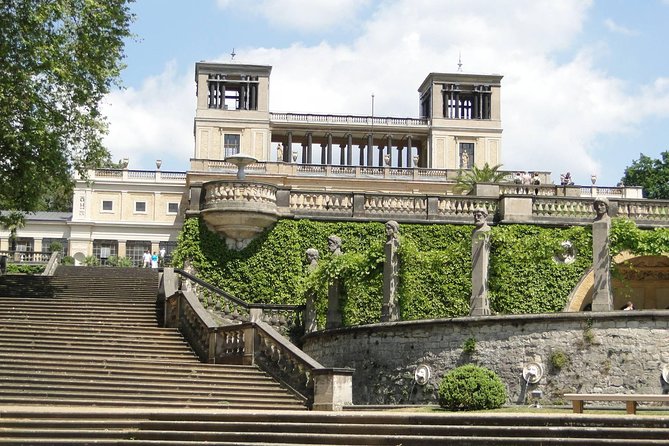
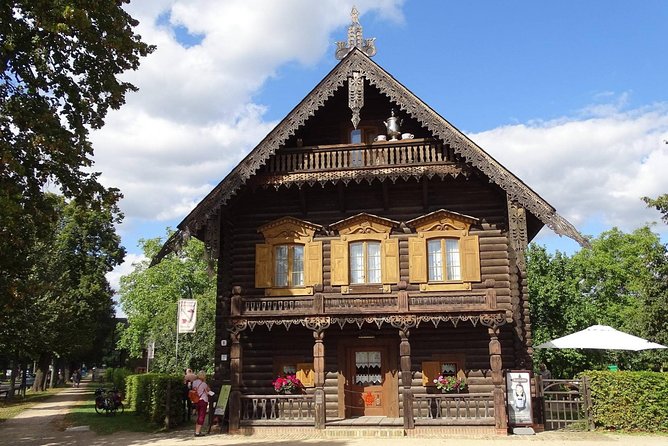
North Potsdam’s Alexandrovka adds another layer to the city’s international past. Frederick William III had the colony built in 1826 and 1827 for the last twelve Russian singers from a former soldiers’ choir.
The settlement was named for Tsar Alexander I, who died in 1825, and it reflects the family and friendly ties between the Hohenzollern and Romanov dynasties. Its inclusion in Potsdam’s UNESCO cultural heritage area gives the stop added importance.
This is a good example of why a guided route helps. Without context, the Russian-style buildings might simply look picturesque. With the story of the singers, the royal connection, and the memorial purpose, the place becomes easier to remember.
Again, the schedule does not promise a long independent visit here. You should treat Alexandrovka as a guided introduction and photo opportunity rather than assume you will have time to explore every building.
Glienicke Bridge and the Cold War’s Bridge of Spies
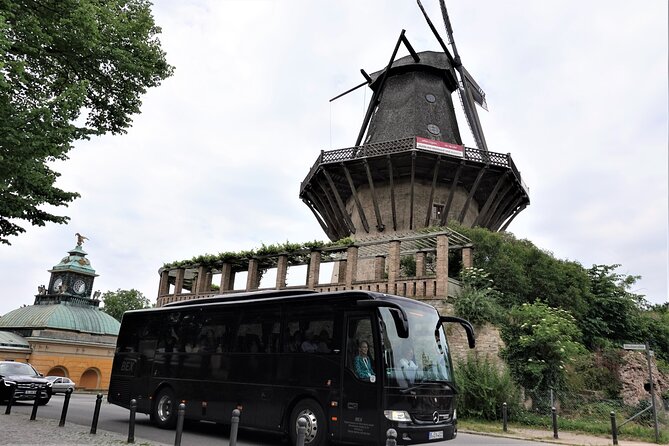
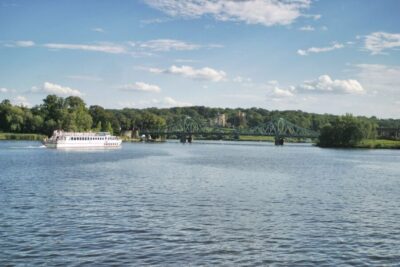
Glienicke Bridge connects Berlin’s Wannsee district with Potsdam across the Havel River. The current bridge was completed in 1907, though it needed major rebuilding after wartime damage.
Its best-known chapter came during the Cold War. Because the river marked the border between West Berlin and East Germany, the bridge became a place where captured spies were exchanged. That history earned it the lasting nickname Bridge of Spies.
The stop works well in a half-day tour because it gives you a clear physical point for a complicated period. The Cold War can feel abstract in a museum. Here, you are looking at the crossing itself, a bridge that once separated political systems and became a stage for secret-agent exchanges.
The tour does not promise a long walk across the bridge, so expect a brief stop rather than a full exploration of the surrounding riverfront. Even so, it is one of the most memorable points on the route and a useful contrast to Sanssouci’s royal calm.
Potsdam’s Old Market and St. Nicholas Church
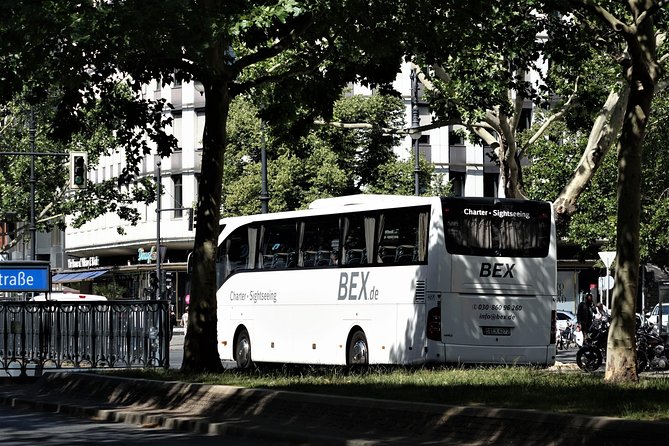
The Old Market Square forms the historic center of Potsdam. At its core is St. Nicholas Church, a Lutheran church designed in the Classicist style by Karl Friedrich Schinkel between 1830 and 1837.
Its 77-meter-high tambour rises above the city roofs, making it easy to recognize. Later work involved Ludwig Persius and Friedrich August Stüler. The church was badly damaged near the end of the Second World War by an air raid and Soviet artillery, then rebuilt and reconsecrated in 1981.
This stop gives you a direct look at Potsdam’s wartime scars and postwar recovery. The city is not only a preserved royal setting. It was damaged, rebuilt, and reshaped, and the church makes that story visible.
St. Nicholas remains open to visitors, with worship services and concerts held there. The tour may not include an extended interior visit, but the square and church help frame Potsdam’s civic center.
What the guides add to the day
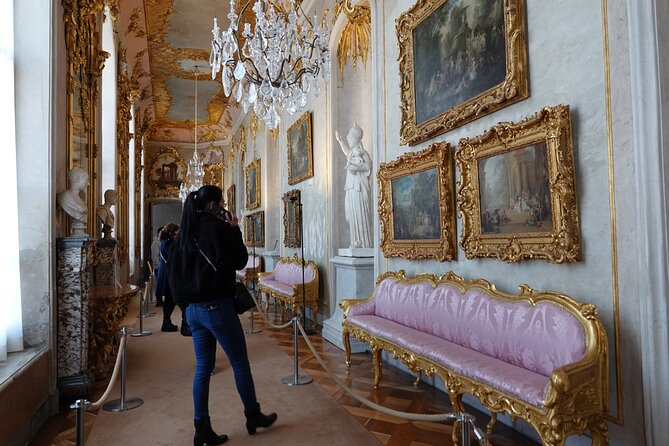
The strongest part of this experience is often the human explanation between the sights. Guides named Susan, Jasmin, Karin, Bridget, and Stefanie have received especially warm praise for their delivery, historical detail, humor, and willingness to answer questions.
Susan is noted for connecting Berlin’s development with Potsdam’s past. Jasmin is praised for energy and for filling the coach ride with information. Karin is described as strong on both the main sites and the places passed on the way. Stefanie is praised for keeping the group entertained while explaining the history.
Those names do not guarantee who will lead your departure, but they show the level of guide quality you may encounter. The tour is offered in English and German, and the guide may switch between both languages. Most departures appear to work well for English speakers, but one experience had much less English commentary than expected.
That bilingual setup is the main communication risk. If precise English explanation is essential to you, ask about the language balance at the start of the tour and stay near the guide when walking. The coach ride can contain a lot of useful information, so missing part of it would reduce the value.
Is $77.23 fair for four hours?
At $77.23 per person, this is not the cheapest way to reach Potsdam. You are paying for the coach, driver, local guide, palace admission, skip-the-line access, and the convenience of seeing several far-flung areas in one organized trip.
The value is strongest if you have limited time in Berlin. You can see Sanssouci and receive historical context without spending your own morning working out transport or palace tickets. The return to Kurfürstendamm also keeps the rest of your day simple.
The value is weaker if you want to spend a full day at Sanssouci or explore Potsdam at street level. Food and drinks are extra, and there is no promise of a long stop in every district. A self-guided visit may give you more freedom, though it will require more planning and may not provide the same level of historical explanation.
I would consider the price reasonable for a first visit, particularly if you want structure and transportation. I would hesitate only if you already know Potsdam well or want a slow day devoted to gardens, museums, and cafés.
Who will enjoy this Potsdam tour most?
This outing suits you if you want a clear introduction to Potsdam without giving up an entire day in Berlin. It works especially well for first-time visitors, history fans, palace enthusiasts, and anyone interested in the relationship between Prussia, Russia, and the Cold War.
It is also a good choice if you prefer riding between sights rather than navigating public transport. The route includes walking and time outdoors, so a moderate level of fitness is needed, but the coach takes care of the long connections.
You may want another option if you need a private guide, a slow photography schedule, or extensive time inside each site. The maximum group size is 30, and the schedule is controlled by the coach timetable.
Book at least a day ahead if plans are uncertain, since free cancellation is available until 24 hours before the 10 a.m. start. Changes or cancellations inside that period are not refunded, and the tour requires a minimum number of participants.
Should you book the Potsdam half-day tour?
I would book this tour if you have four spare hours, want Sanssouci entry handled for you, and value a guide who can connect the palace with Potsdam’s larger story. The Bridge of Spies, Dutch Quarter, Alexandrovka, Old Market, and St. Nicholas Church give the outing more range than a palace-only excursion.
Go in with the right expectations. You are buying an efficient introduction, not a leisurely full-day study of Potsdam. If the English and German commentary is balanced on your departure, the coach ride becomes part of the lesson rather than mere transport.
Bring water, a snack, comfortable shoes, and 50-cent coins for a restroom stop. If you can accept the brisk pace, this is a practical and historically satisfying way to add Potsdam to a Berlin visit.
FAQ
Where does the tour start?
The tour starts at Kurfürstendamm 216, 10719 Berlin.
What time does the tour leave?
The scheduled departure time is 10 a.m.
How long does the tour last?
The tour lasts approximately four hours.
Does the tour return to Berlin?
Yes. The activity ends back at the meeting point on Kurfürstendamm.
Is Sanssouci Palace admission included?
Yes. Admission to Sanssouci Palace is included, along with guaranteed skip-the-line access.
Is the tour offered in English?
Yes. The tour is offered in English and includes a local guide in English and German.
Are food and drinks included?
No. Food and drinks are not included in the tour price.
How many people can join the tour?
The tour can have a maximum of 30 participants.
Newest Berlin reviews
- Where It All Began: Berlin’s Queer & Trans History Tour★ 4.9 · 6 reviews
- Understanding Kreuzberg: The roots of local (sub)culture★ 4.9 · 11 reviews
- Berlin: guided canoe | kayaktour★ 4.1 · 7 reviews
- Private Potsdam City Tour in an authentic vintage van★ 5.0 · 14 reviews
- Warnemünde Shore Excursion: Private Sachsenhausen and Berlin Tour★ 5.0 · 12 reviews
- Ultimate E-Bike Tour of Berlin with Beer Garden Stop★ 5.0 · 4 reviews
- In the Forbidden City – Potsdam Walking Tour★ 5.0 · 17 reviews
- Private Walking Tour of Potsdam and Sanssouci★ 5.0 · 24 reviews
Potsdam and Sanssouci Day Trips, compared.
Sanssouci Palace and Prussian Palaces Entry Ticket
Read our review →
Sachsenhausen Concentration Camp and Potsdam Tour
Read our review →
Browse the lists this tour appears in