
Reviewed · BERLIN BIKE TOURS
3-Hour Bike Tour of Tiergarten and Berlin’s Hidden Places
Berlin’s past comes into focus when you pedal between a quiet medieval church, a bear enclosure, postwar housing, and a ballroom that has kept dancing through decades of change. This three-hour bike tour skips the standard sightseeing loop and connects parts of Berlin that make more sense together on two wheels.
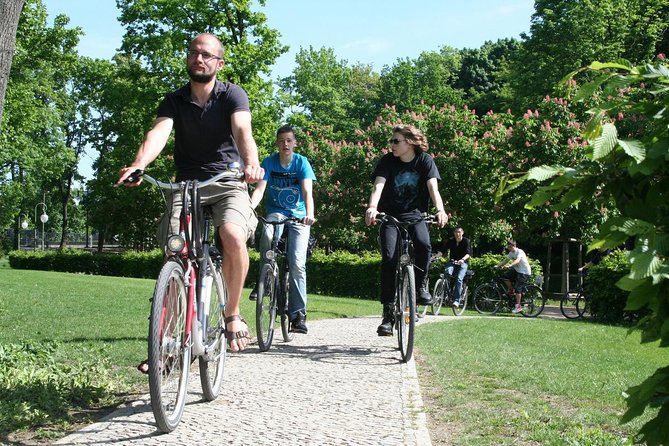
I like the use of bike lanes, garden paths, and calm side streets, which keeps the ride pleasant rather than frantic. I also like the small group size, limited to 15 people, and the chance to hear an engaging local guide such as David, whose humor and Berlin perspective have earned especially warm praise.
The main drawback is the lack of a planned food or drink stop. Three hours on a bike is manageable for most people, but one participant specifically wished for a short break to buy something. Bring water and a small snack before you set off.
Key points to know before you pedal away
- You see a different Berlin: The route links Tiergarten with Nikolaiviertel, medieval ruins, postwar architecture, courtyards, and cultural stops.
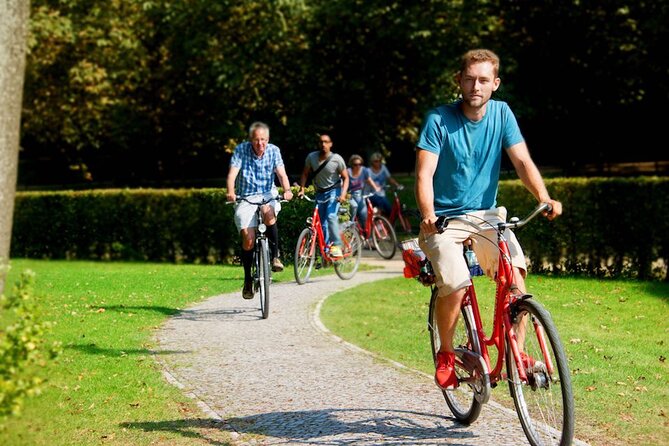
- The ride is active but leisurely: You use bicycles, helmets, bike lanes, paths, and quiet streets rather than tackling a fast road route.
- The tour is German-only: An English-speaking private tour must be chosen instead.
- The group stays fairly small: The minimum is five people and the maximum is 15.
- David may be your guide: He is praised for Berlin humor, clear speaking, and strong subject knowledge, but guide assignments are not guaranteed.
- The tour returns to its start: Meet at Poststraße 11 in central Berlin, and finish at the same point.
Why this route shows Berlin better than a standard sightseeing loop
Berlin is a wide, scattered city. Its major sights can fill a day, but the spaces between them often explain more about how the city changed. This ride uses those spaces well.
You move from the leafy Tiergarten to the old center, then toward areas shaped by war, rebuilding, modern design, art, nightlife, and new wealth. The route does not ask you to spend hours inside museums. Instead, you stop outdoors, hear a focused story, look around, and continue.
That format suits me when I want context without giving up half a day to one attraction. You get an active way to cover ground, but the pace remains easy enough for regular sightseeing cyclists. The stops are short, usually 10 to 15 minutes, with 30 minutes in Tiergarten.
The maximum group size of 15 matters here. Berlin’s bike paths and narrow urban streets are easier to manage with a modest group than with a large coach-load of people. It also gives you a better chance to hear the guide at each stop, though the experience will still feel like a group tour rather than a private outing.
More bike tours in Berlin:
- Berlin: Sights and Highlights Bike Tour with a Local Guide
★ 4.8 · 2,698 reviews - Berlin Highlights 3-Hour Bike Tour
★ 5.0 · 948 reviews - Berlin City Bike Tour with Beer Garden Stop
★ 5.0 · 917 reviews
Starting at Poststraße 11 with a city bike
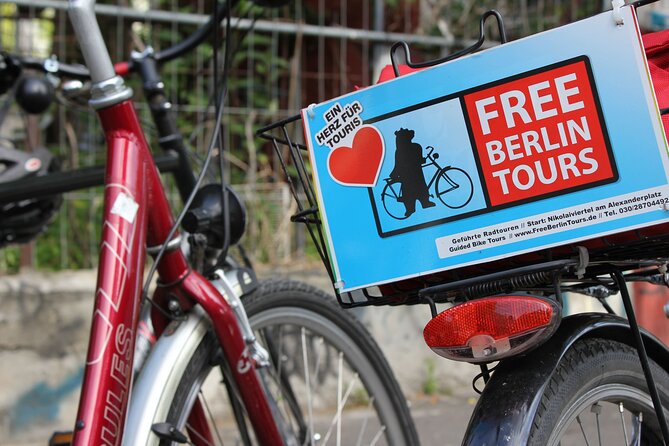
The tour begins at Free Berlin Bike Tours, at Poststraße 11, 10178 Berlin. This is also where you receive your bicycle and helmet, and where the ride ends.
The price is $45.10 per person. For three hours, that is a fair price if you want the bike, helmet, guide, and a planned route through several parts of central Berlin. You are not paying for museum admissions, since the stops are viewed from outside and admission is free.
The value comes from the route and the interpretation. You could rent a bike and ride through Tiergarten alone for less, but you would miss the connections between the bear symbol, medieval Berlin, postwar housing, and the city’s changing social districts. You also would need to plan the route yourself and find each stop.
The bikes are described as comfortable urban cruisers. That suggests a relaxed sightseeing position rather than a sporty ride. You do not need to treat this as an athletic activity, but you should be comfortable cycling for about three hours with regular stops.
Children must be accompanied by an adult. Most people can take part, but you should dress for the weather because the tour operates in all conditions. The route is near public transportation, which makes the central meeting point practical.
Tiergarten: Berlin’s green breathing space
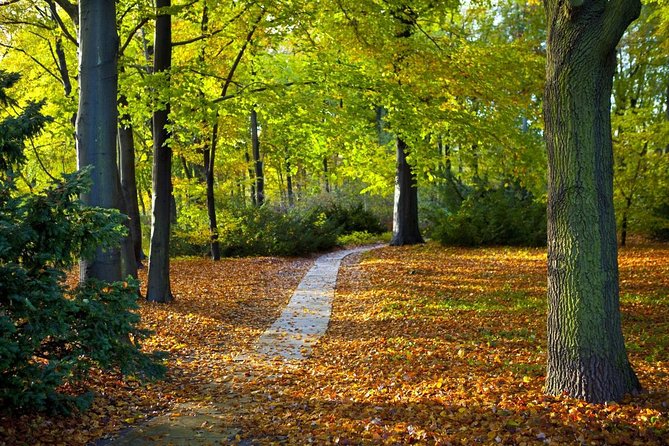
The first major stop is Tiergarten, Berlin’s central park. You spend about 30 minutes here, using garden paths and quieter routes to see a side of the capital that buses cannot reach.
The park gives the tour a gentle opening. You are away from heavy city traffic, yet still close to central Berlin. Your guide can place the surrounding monuments and government quarter within the wider story of the city without forcing you to stop at every major landmark.
I like this part because it shows why a bicycle works so well in Berlin. You cover more ground than on foot, but you can still stop easily when something catches your eye. The route also gives you time to settle into the bike before the denser city stops begin.
The drawback is that Tiergarten is a broad area, and a 30-minute visit cannot explain everything. Think of it as a scenic and historical introduction, not a complete park tour.
Nikolaiviertel and the place where Berlin began
Nikolaiviertel is described as the place of Berlin’s origin. This quiet quarter in the city center was remodelled after destruction in the 1980s, giving you a compact example of how Berlin rebuilds and reinterprets its past.
The stop lasts about 10 minutes. That is enough to look around and hear why the district matters, but not enough for a long architectural study or a leisurely meal. Its value comes from the contrast with the open park you have just left.
You see a carefully shaped old quarter in the middle of a modern capital. That makes Nikolaiviertel useful for understanding Berlin’s habit of rebuilding historic-looking spaces rather than simply preserving whatever survived.
More three-hour experiences in Berlin:
- Berlin Highlights: 3-Hour Bike Tour
★ 4.9 · 809 reviews - Berlin: 3-Hour Street Art Tour
★ 4.7 · 778 reviews - Berlin: 3-Hour Secret Food Tour
★ 4.8 · 269 reviews - Berlin: 3-Hour Segway Tour
★ 4.7 · 112 reviews
Märkisches Museum and Berlin’s changing shape
Near Märkisches Museum, you stop to look at large three-dimensional city models of Berlin. These models help explain how the city keeps changing and renewing itself.
This is one of the more practical stops on the route because a model can make Berlin’s size and growth easier to grasp. The city is not a tidy collection of old streets. It has been cut apart, rebuilt, expanded, and redesigned many times.
You spend about 15 minutes here. That is long enough for the guide to use the models as a visual aid, but you should not expect an interior museum visit. If you enjoy urban planning, architecture, or the story of how cities change, this may be one of the most useful stops.
Bärenzwinger and Berlin’s bear story
The Bärenzwinger stop asks where the name Berlin comes from and what bears have to do with it. It is a quick visit of about 10 minutes, but the subject gives you a memorable link between a familiar city symbol and Berlin’s origins.
This kind of stop is a strength of the ride. You are not only looking at grand monuments. You are also hearing the small civic stories that make a place easier to remember.
Because the visit is brief, expect an explanation rather than an extended attraction. The stop works best as part of the route’s larger pattern, with each short story adding another piece to your understanding of Berlin.
Two churches, two views of destruction and survival
Parochialkirche brings together religion, destruction, rebuilding, and the idea of designated survivors. The subject is serious, but the short 10-minute stop keeps it focused.
The nearby Franziskaner Klosterkirche offers another look at Berlin’s medieval past. It is an abandoned place and a rare memorial to the city’s earlier history. Together, these churches show how much of old Berlin disappeared, and how fragments can still shape the modern city.
I appreciate having both stops in the same ride. They are not presented as polished, isolated monuments. Instead, you see buildings marked by loss, repair, and neglect. That gives you a more honest sense of Berlin than a simple parade of restored façades.
You should also keep your expectations in check. These are short outdoor stops, not guided church interiors or lengthy historical lectures. The guide’s explanation is the main reason to pause.
The Global Stone Project, Berlin’s unusual Stonehenge
The Global Stone Project is presented as Berlin’s Stonehenge, with the playful subtitle that love can be difficult sometimes. You spend about 15 minutes here.
This is one of the route’s more unusual pauses. It brings you to a curious public work rather than another famous historic building. The project gives the guide room to talk about Berlin’s modern art and public spaces, while the title hints at a story with a personal or romantic angle.
You may find this stop more memorable than a standard monument because it feels unexpected. It also breaks up the sequence of churches and historic districts. The exact appeal will depend on your interest in public art, but the variety keeps the ride from becoming a string of similar buildings.
Hansaviertel and the future imagined in 1957
Hansaviertel looks at the future of housing from the perspective of 1957. This is a useful stop for anyone interested in design, architecture, or the way cities imagine modern life.
You spend about 15 minutes here. The subject gives you a chance to compare postwar ideas with the older quarters earlier in the route. Berlin’s rebuilding was not just about restoring the past. It also involved testing new forms of housing and new ideas about how people should live.
This stop adds depth to the tour because it shifts the focus from ruins and historic symbols to everyday urban design. You are looking at homes and planning choices, not only places made for sightseeing.
Clärchens Ballhaus and Berlin’s long night of dancing
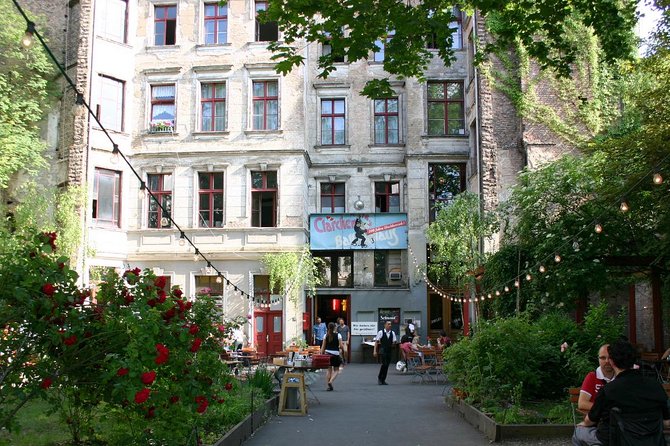
Clärchens Ballhaus is described as a place that has kept dancing, surrounded by a slightly morbid charm. The stop lasts around 10 minutes.
Even without an interior visit, the building and its story add a human touch to the route. Berlin is often explained through war, walls, politics, and architecture. A ballroom reminds you that ordinary social life continued through those changes.
This is another stop where the guide’s delivery matters. A lively German-speaking guide such as David can bring out the humor in the place, while still explaining why it matters. The guide has been praised for combining Berlin character with strong factual command, a rare and useful mix on a history tour.
Scheunenviertel: courtyards, culture, and city change
The final major stop is Scheunenviertel, an area associated with courtyard oases, shopping, restaurants, art, culture, and nightlife. It shows Berlin in a newer social and commercial phase.
The stop is about 15 minutes, so you are getting an introduction rather than a full neighborhood walk. Still, it is a helpful final chapter after the medieval, wartime, and postwar subjects earlier in the ride.
You can see how a district changes as people, businesses, and cultural spaces move in. The area’s appeal is not only its buildings. It is also the mix of daily life, food, art, and evening activity. If you like places that feel lived in rather than arranged solely for sightseeing, this part may be a highlight.
Since the tour ends back at Poststraße 11, you can use the rest of your day to return to any area that caught your attention. That is one of the quiet benefits of a route with many short stops: it helps you choose where to spend more time later.
What the German-only format means for your choice
This tour is available only in German. If you need English commentary, you should choose a private tour instead.
That language restriction is the most important booking detail. You need enough German to follow spoken explanations while cycling, standing outdoors, and moving between stops. A private English tour may cost more, but it is the better choice if language is likely to prevent you from catching the historical details.
If you understand German, the format can feel more local and less packaged. The guide’s humor and personal Berlin voice become part of the experience, especially at stops such as the Bärenzwinger, the Global Stone Project, and Clärchens Ballhaus.
The tour has a 4.8 rating from 26 reviews, with 96 percent recommending it. That record suggests strong satisfaction, but you should still match your expectations to the format: outdoor stops, a German-speaking guide, and steady cycling rather than a museum-heavy tour.
Food, weather, and simple ways to prepare
Food and drinks are not included. Since there is no stated refreshment stop, eat beforehand and carry water. A small snack is sensible, particularly if you are not used to cycling for several hours.
The tour runs in all weather. Wear clothing that works for the forecast and shoes you can pedal in comfortably. Rain or cold will affect the experience more than it would on a coach tour because you remain outside for the full three hours.
The route uses bike lanes, park paths, and quiet side streets, but you are still cycling in a city. Pay attention to the guide, other cyclists, and traffic conditions. Children need an accompanying adult, and the activity is suited to most people who can manage a leisurely three-hour bike ride.
Free cancellation is available up to 24 hours before the start time for a full refund. Cancellations or changes within 24 hours are not refunded or accepted. The tour also needs a minimum number of participants, so a cancellation for that reason leads to another date or experience, or a full refund.
Who should book this Berlin bike tour?
I would choose this tour if you want to understand Berlin through its smaller stories and changing neighborhoods. It is especially well suited to people who enjoy history, architecture, public art, city planning, and local anecdotes but do not want to spend the whole day indoors.
It also suits a first visit because the route gives you a useful map of central Berlin. You see the park, the old center, the rebuilt quarters, modern housing, and a lively district in one outing.
You should skip it if you want a fast list of Berlin’s biggest sights, an English-speaking group tour, or a long food break. It is also not the right match if three hours outdoors on a bicycle sounds tiring.
Should you book it?
Book this tour if you speak German and want a thoughtful, active introduction to Berlin beyond the headline monuments. At $45.10, the bike, helmet, guide, small group, and varied route make good sense for the price.
Bring water, prepare for the weather, and expect short stops rather than long visits. If you can accept those limits, the tour offers a useful view of Berlin as a city that keeps rebuilding, changing its ideas, and preserving curious pieces of its past.
FAQ
How long is the bike tour?
The tour lasts approximately three hours.
Where does the tour begin?
It begins at Free Berlin Bike Tours, Poststraße 11, 10178 Berlin, Germany.
Where does the tour end?
The tour ends back at the meeting point on Poststraße.
Is the tour available in English?
No. This activity is available only in German. For English, you should choose a private tour.
What is included in the price?
The price includes a professional guide, use of a bicycle, and use of a helmet.
Are food and drinks included?
No. Food and drinks are not included unless specifically stated. A short stop to buy refreshments is not guaranteed.
How many people can join the tour?
The minimum is five participants and the maximum is 15.
Can children join the bike tour?
Yes, but children must be accompanied by an adult.
What happens if I need to cancel?
You can cancel up to 24 hours before the start time for a full refund. Cancellations made less than 24 hours before the start time are not refunded.
Newest Berlin reviews
- Where It All Began: Berlin’s Queer & Trans History Tour★ 4.9 · 6 reviews
- Understanding Kreuzberg: The roots of local (sub)culture★ 4.9 · 11 reviews
- Berlin: guided canoe | kayaktour★ 4.1 · 7 reviews
- Private Potsdam City Tour in an authentic vintage van★ 5.0 · 14 reviews
- Warnemünde Shore Excursion: Private Sachsenhausen and Berlin Tour★ 5.0 · 12 reviews
- Ultimate E-Bike Tour of Berlin with Beer Garden Stop★ 5.0 · 4 reviews
- Private Walking Tour of Potsdam and Sanssouci★ 5.0 · 24 reviews
- Potsdam Highlights – Private sightseeing tour by minibus★ 5.0 · 3 reviews
Berlin Bike Tours, compared.
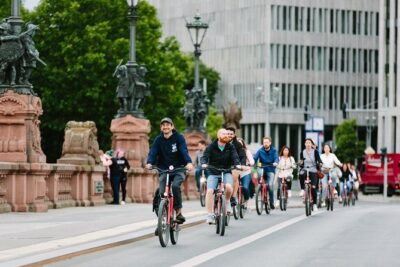
Sights and Highlights Bike Tour with a Local Guide
Read our review →
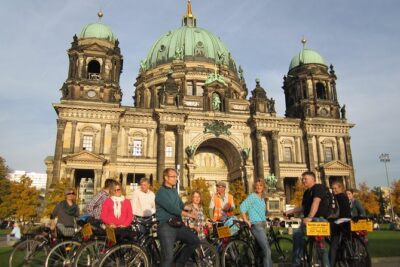
Berlin Highlights Sightseeing Bike Tour in Small Groups
Read our review →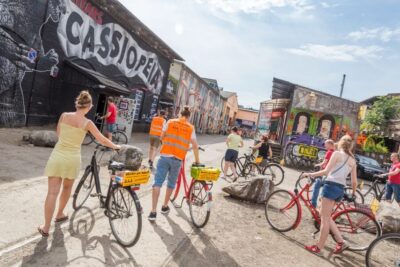
Alternative Bike Tour of Kreuzberg & Friedrichshain
Read our review →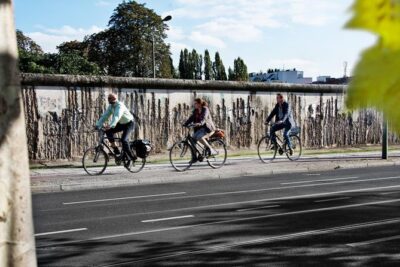
Guided Bike Tour of the Berlin Wall and Third Reich
Read our review →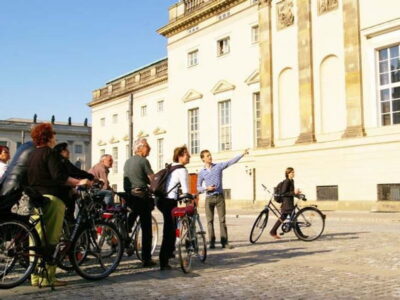
Browse the lists this tour appears in